Pope Leo XIV inaugurates the Sagrada Família's Tower of Jesus Christ on the Gaudí centenary
Pope Leo XIV will inaugurate the Tower of Jesus Christ at the Basílica de la Sagrada Família on 10 June 2026, the hundredth anniversary of Antoni Gaudí's death. The papal visit to Barcelona spans 9 and 10 June within a wider Spain trip from 6 to 12 June. With the new tower, the basilica reaches 172.5 metres and becomes the tallest church in the world.
What happens during the papal visit on June 9 and 10?
Pope Leo XIV will spend roughly thirty-five hours in Barcelona between Tuesday June 9 and Wednesday June 10, 2026, as part of a wider Spain trip that runs from June 6 to June 12. The Barcelona stop falls between the Madrid leg and the Canary Islands leg. The Archdiocese of Barcelona's organising committee, led by auxiliary bishop David Abadías, drafted the schedule below, which remains pending final Holy See approval.
Tuesday, June 9, 2026
The Pope arrives in Barcelona for an outdoor gathering at the Estadi Olímpic Lluís Companys on Montjuïc hill, the city's largest open-air venue. The format is still being defined as either a Mass or a prayer meeting, with capacity for tens of thousands of attendees from across Catalonia and beyond.
Wednesday, June 10, 2026
The morning opens with a floral offering at the tomb of Antoni Gaudí, the Catalan architect, in the basilica crypt, an institutional act bringing together civic authorities and the Catholic hierarchy. In the afternoon, Pope Leo XIV officiates a solemn Mass inside the basilica, concelebrated by cardinals, bishops, and priests, with Catalan musicians and choirs performing throughout the liturgy. Immediately afterward comes the blessing and inauguration of the Tower of Jesus Christ. The day closes with a light show projecting across the new tower and the Barcelona sky as a visual tribute to Gaudí.
Types of tickets to visit the Sagrada Familia
What is the Tower of Jesus Christ?
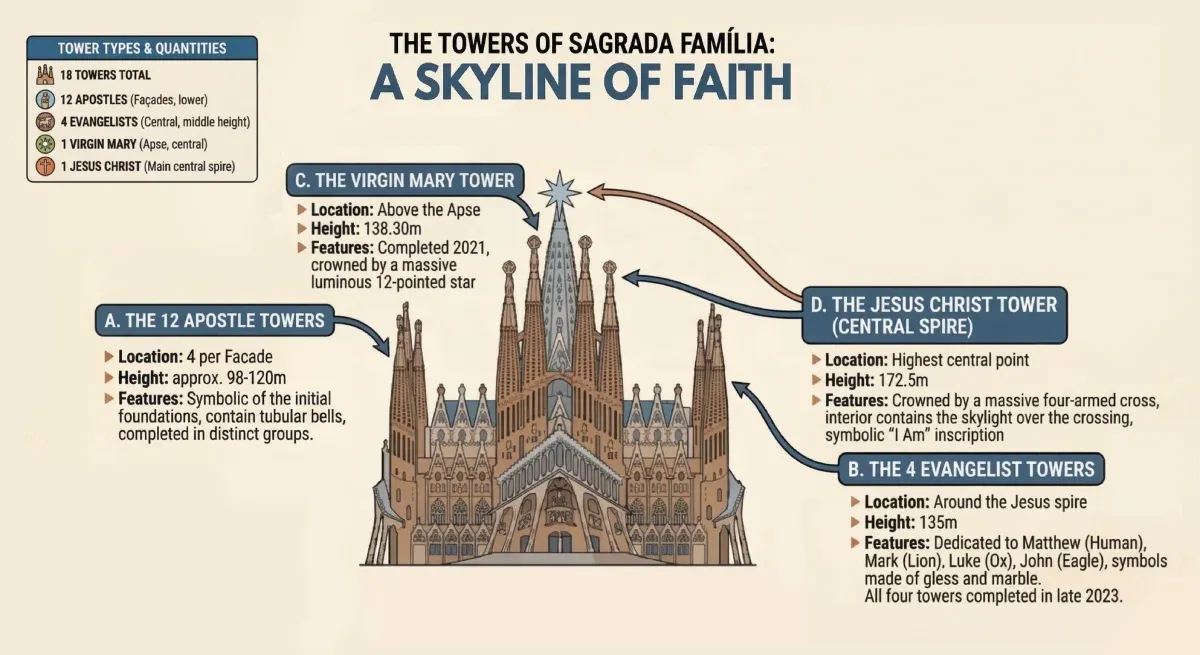
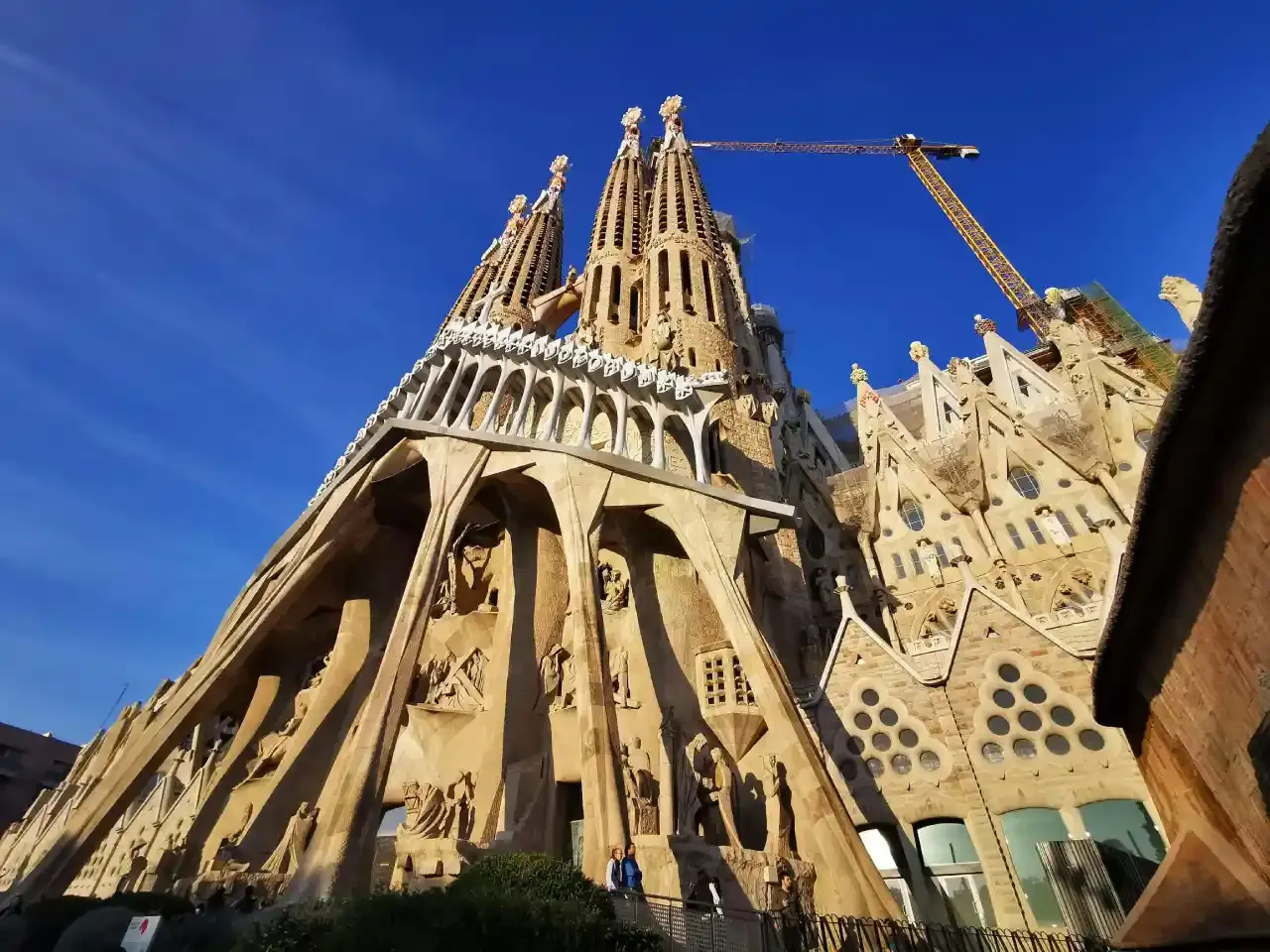
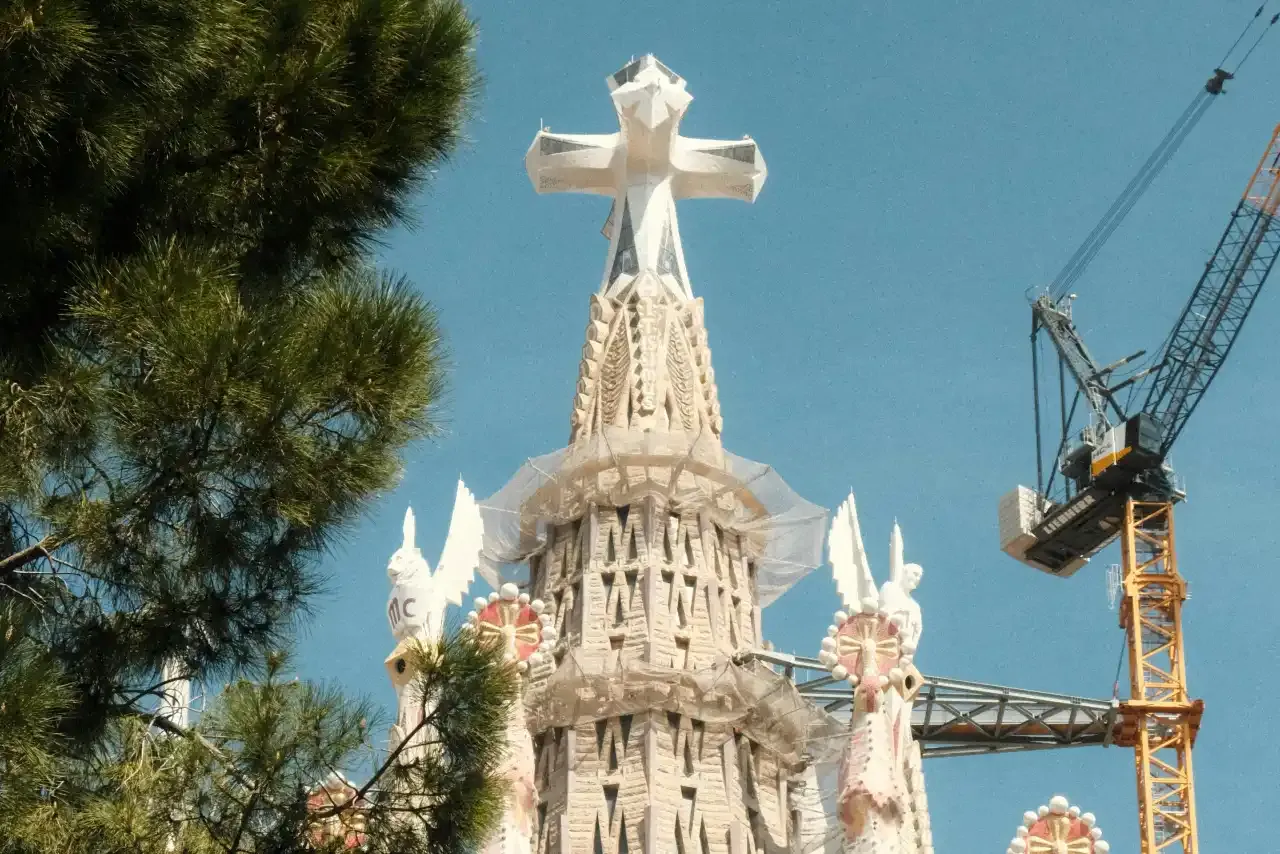
The Tower of Jesus Christ is the central spire of the Sagrada Família, reaching a final height of 172.5 metres (566 feet) and making the basilica the tallest church in the world. Workers completed its exterior on 20 February 2026, setting the upper arm of the cross in place. All six central towers of the basilica now stand exterior-complete: the four Evangelists, the Virgin Mary, and Jesus Christ.
| Feature | Specification |
|---|---|
| Final height | 172.5 m (566 ft) |
| Status | Tallest church in the world |
| Floor plan | 12-sided |
| Tower structure | 12 levels of prefabricated stone-steel panels |
| Cross height | 17 m |
| Cross width | 13.5 m |
| Cross weight | Approximately 100 tonnes |
| Cross sections | Seven joined components |
| Cross arms | Four, visible from any direction |
| First arm installed | 27 October 2025 |
| Final arm installed | 20 February 2026 |
The summit cross is built from white glazed ceramic and glass. Components were manufactured in Germany and assembled on-site by Sagrada Família workshops. A 29 metre terminal section carries an inscription drawn from the Gloria of the Mass: "You alone are the Holy One, you alone the Lord, you alone the Most High."
Inside the upper arm of the cross sits a sculpture of the Lamb of God, the Agnus Dei, by Italian artist Andrea Mastrovito. The cross is hollow, and a future viewing platform will allow eleven people at a time to enter from inside the tower. A further proposal awaits Barcelona city government approval: light beams projected from each of the four cross arms, intended to make the basilica function as what its planners describe as a spiritual lighthouse over the city.
The 172.5 metre figure is not arbitrary. Antoni Gaudí imposed a self-rule that no work of man should surpass the work of God. Montjuïc hill, a natural feature southwest of the three façades of the basilica, rises to 177 metres. The new tower respects that limit by exactly 4.5 metres.
Why does June 10, 2026 matter?
June 10, 2026 is the hundredth anniversary of Antoni Gaudí's death. On 7 June 1926, on his way to the Sagrada Família construction site in Barcelona, Gaudí was struck by a tram. He died three days later, on 10 June 1926. He was 73 years old.
Construction of the basilica had begun on 19 March 1882, the festival of St. Joseph, under a different architect. Gaudí took over the project in 1883 and devoted forty years of his life to it. By the time he died, the building was between fifteen and twenty-five percent complete. He is buried in the basilica crypt, in the Chapel of Our Lady of Carmel, beneath the floor of the church he never saw finished.
Three of Gaudí's quotations now circulate as the symbolic frame for the centenary. On the question of whether the church would ever be completed, he answered, "My client is not in a hurry." On succession, he expected, "Saint Joseph will finish this church." On the height limit of his central spire, he insisted that no work of man should surpass the work of God. The Vatican's choice of June 10 as the date for the Tower of Jesus Christ inauguration ties all three threads together. Pope Leo XIV will bless a tower that respects Gaudí's height rule on the exact day, one century later, that the architect died.
How does Pope Leo XIV's visit compare with Pope Benedict XVI's 2010 consecration
Three popes have visited the Sagrada Família in modern history. Pope Leo XIV's 2026 inauguration of the Tower of Jesus Christ marks a categorical shift from the earlier visits: the basilica that he blesses is architecturally complete in its central tower, where the basilica that Pope Benedict XVI consecrated in 2010 was a place of worship still missing its central spire.
| Detail | Benedict XVI, 7 November 2010 | Leo XIV, 10 June 2026 |
|---|---|---|
| Pope | Pope Benedict XVI | Pope Leo XIV |
| Ceremony | Consecration of the basilica and altar | Solemn Mass and inauguration of the Tower of Jesus Christ |
| Basilica state | Designated minor basilica, central tower not yet built | Six central towers exterior-complete; basilica reaches 172.5 m |
| Attendees inside | 6,500 | Capacity to be confirmed; some events by invitation only |
| Attendees outside | Approximately 250,000 in surrounding streets | Public broadcast plus street access around the temple |
| Other officials present | King Juan Carlos, Queen Sofía, Prime Minister José Luis Rodríguez Zapatero | King Felipe VI of Spain has formally invited the Pope |
| Ceremonial detail | Holy water sprinkled on the altar; chrism oil anointing of altar and columns | Floral offering at Gaudí's tomb; blessing of the new tower; evening light show |
Pope John Paul II visited Barcelona on 7 November 1982 during his first official trip to Spain. He prayed the Angelus from the Nativity Façade of the basilica, blessed the crowd, and described the Sagrada Família as a building "made with living stones." Pope Francis, who led the Catholic Church from 2013 until his death in April 2025, never visited Spain in person, though he sent a video message in December 2021 for the inauguration of the Tower of the Virgin Mary.
Pope Leo XIV, elected in May 2025, is the first United States-born pope. His June 2026 trip is the first papal visit to Spain since 2010, the first to the Sagrada Família since the Benedict XVI consecration, and the first time a sitting pope has formally inaugurated a tower of the basilica. The architectural arc reads cleanly: 2010 marked the basilica's consecration as a Catholic place of worship, 2026 marks its arrival at architectural near-completion at the central tower, and the completion timeline projects 2035 as the target for the final remaining work.
What still remains for the basilica to be finished?
The June 2026 inauguration completes the exterior of the central tower, but the basilica is not yet finished. The Junta Constructora del Temple Expiatori has set 2035 as the projected target for full completion, a date revised from earlier 2026 estimates after delays from COVID-19, the two World Wars, and the Spanish Civil War. The remaining work breaks down into a clear inventory:
- Interior finishing of the Tower of Jesus Christ, scheduled for 2027 and 2028
- Completion of the Glory Façade, the basilica's main ceremonial entrance, with its central doors carrying the Lord's Prayer in Catalan and forty-nine other languages
- Construction of the Chapel of the Assumption
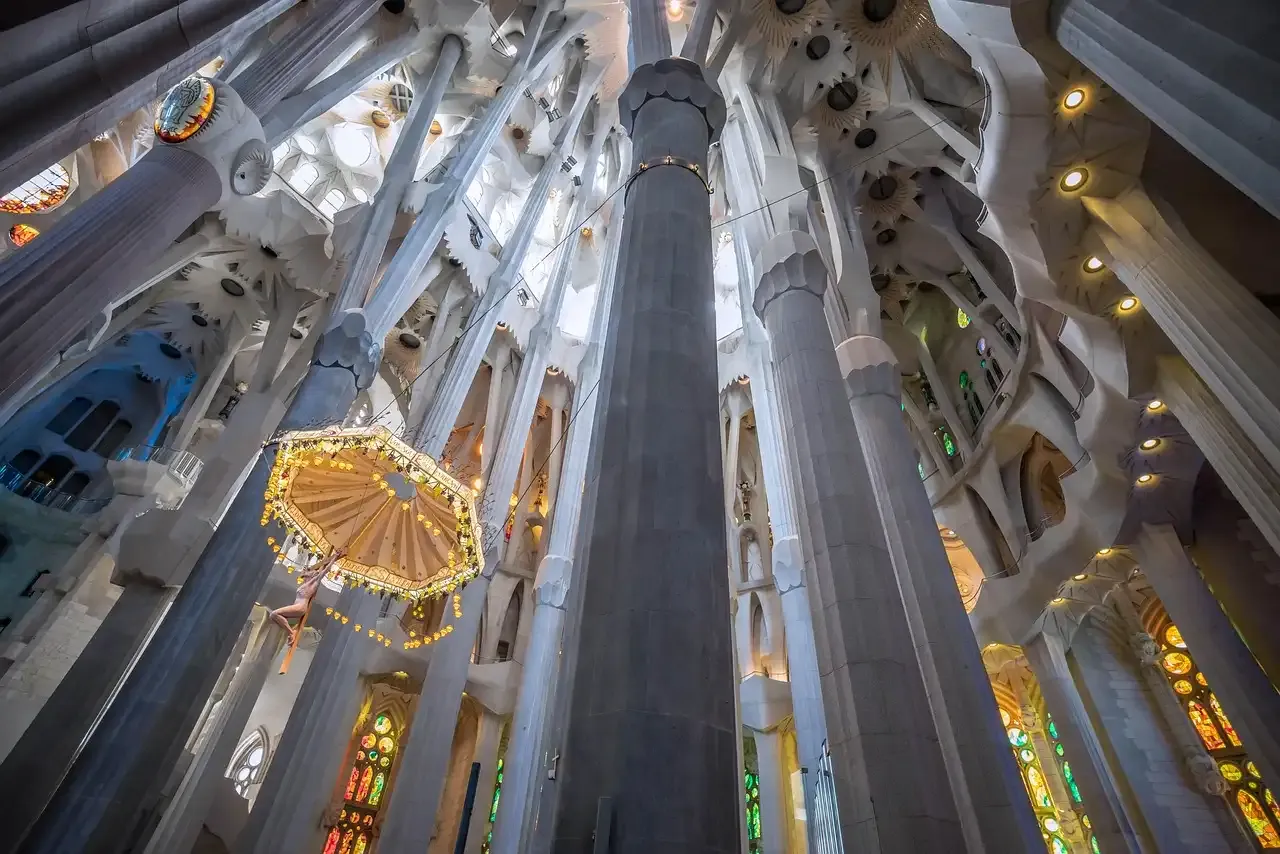
- Final liturgical fittings, lighting, and furnishings inside the temple
- Removal of all remaining cranes and scaffolding
- A monumental staircase leading up to the Glory Façade, the most contested element of the original plan because building it would require demolishing two city blocks housing roughly 1,000 residents
The basilica receives no government or church funding. Construction is paid for entirely by visitor entrance fees. In 2024 the temple welcomed approximately 4.9 million visitors and sold around 4.8 million tickets, placing it among the most visited religious sites in Europe. Chief architect Jordi Faulí leads the technical team responsible for translating Gaudí's surviving drawings, plaster models, and reconstructed plans into the final phase of the three façades, the interior, and the central tower's interior. The pace from here, on the completion timeline, depends on visitor revenue and the unresolved question of how Barcelona will treat the proposed staircase.
How does the visit fit into the broader 2026 calendar?
The papal visit lands at the intersection of three milestones converging on Barcelona in 2026. The first is the centenary of Antoni Gaudí's death, marked across Spain and Catalonia as Gaudí Year. The second is the architectural completion of the Tower of Jesus Christ, the basilica's tallest spire. The third is Barcelona's designation as World Capital of Architecture 2026 by the International Union of Architects (UIA), with the UIA World Congress of Architects also held in the city this year.
The Spanish national government formalised the centenary with administrative weight. On 9 July 2025 it declared Gaudí Year an Acontecimiento de Excepcional Interés Público (AEIP), the highest category of officially recognised commemorative event. The Catalan government followed on 8 July 2025 with the inclusion of Gaudí Year on its 2026 commemorations list. Programme coordination falls to the Gaudí Council, an advisory body to the Catalan Ministry of Culture.
The Sagrada Família's own 2026 programme stretches from late 2025 through Christmas 2026:
- 30 November 2025: lighting of the Tower of Saint Barnabas, the only spire Gaudí saw completed in his lifetime, on the centenary of its 1925 completion
- 19 March 2026: cornerstone anniversary mass with Orfeó Català performing in the central nave
- 9-10 June 2026: papal visit, with solemn Mass, Tower of Jesus Christ blessing, and evening light show
- 26 September and 3 October 2026: outdoor performances featuring castellers, sardana dancers, esbart folk dancers, and the Barcelona Municipal Band
- December 2026: lighting of the Nativity Façade and Catalan Christmas carols inside the temple
The October performances and the December façade lighting close the year. The papal day in June is the single most internationally visible moment of the calendar.
What does this mean for visitors?
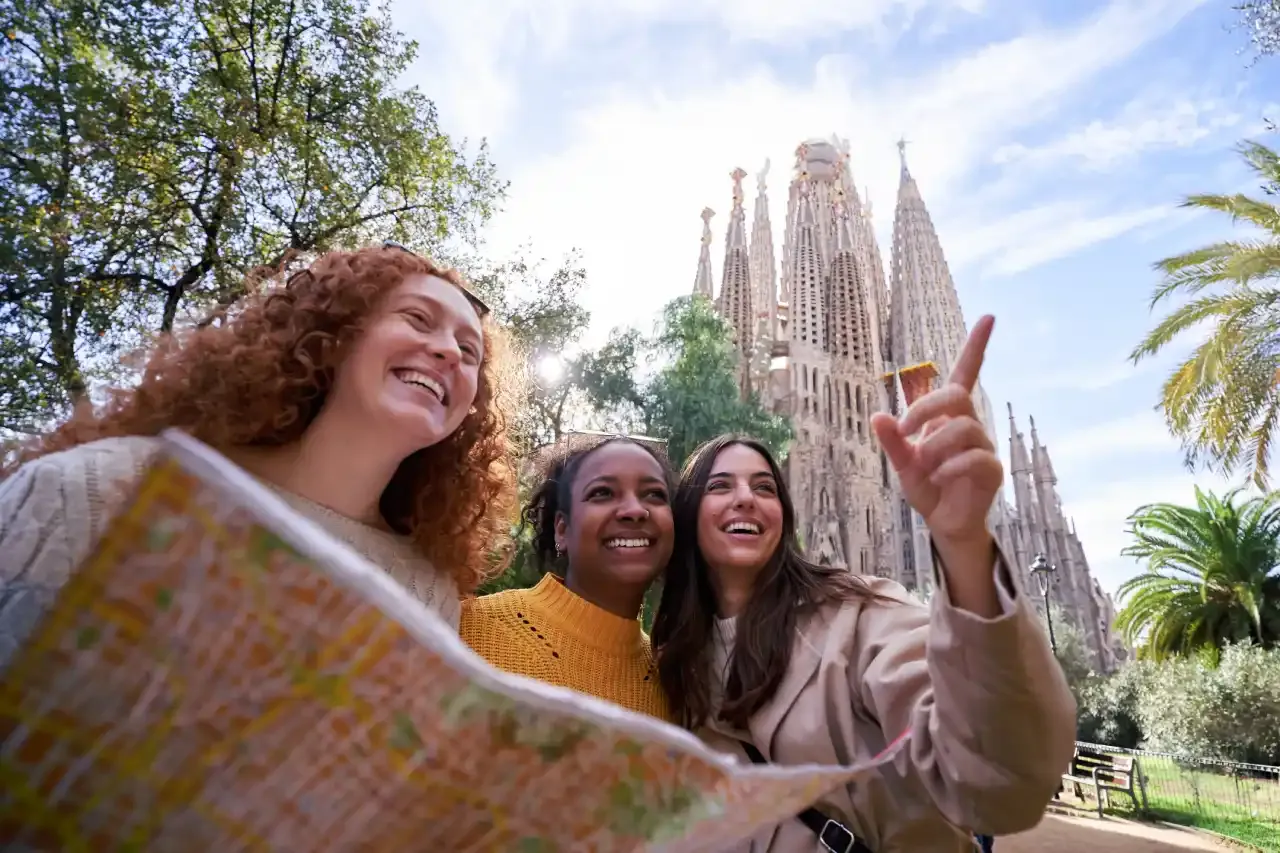
Visitors planning travel around 9 and 10 June 2026 should expect heightened activity, security perimeters, and possible temporary closures of the basilica and its immediate surroundings. Practical implications:
- Some events have limited capacity and require invitations issued in advance for specific ceremonies inside the temple
- The blessing and inauguration of the Tower of Jesus Christ will be broadcast live on television, and the new tower will be visible from the street outside the security perimeter
- Future tower access for the public will be limited initially after the inauguration, with the Junta Constructora to publish details closer to the date; current tower access tickets cover existing visitable towers
- Visitors with reduced mobility will receive priority access for the basilica events, with descriptive and sign-language audioguides already available
- Cardinal Juan José Omella, Archbishop of Barcelona, is planning a separate pastoral visit during the Pope's stay
- Travelers visiting the city in early June 2026 should book lodging well in advance, since Barcelona expects a heavy inflow of pilgrims and journalists around the papal weekend
For travelers arriving outside the immediate visit window, regular basilica access continues with normal hours. The temple sits at Carrer de la Marina in the Eixample district, served by metro lines L2 and L5 at the Sagrada Familia station and by city buses 19, 33, 34, D50, H10, and B24. Individual visitors enter through the Nativity Façade. Tickets are nominative, personal, and non-transferable, and a quiet hour applies daily from 09:00 to 10:00 from 2 February 2026 onward.