
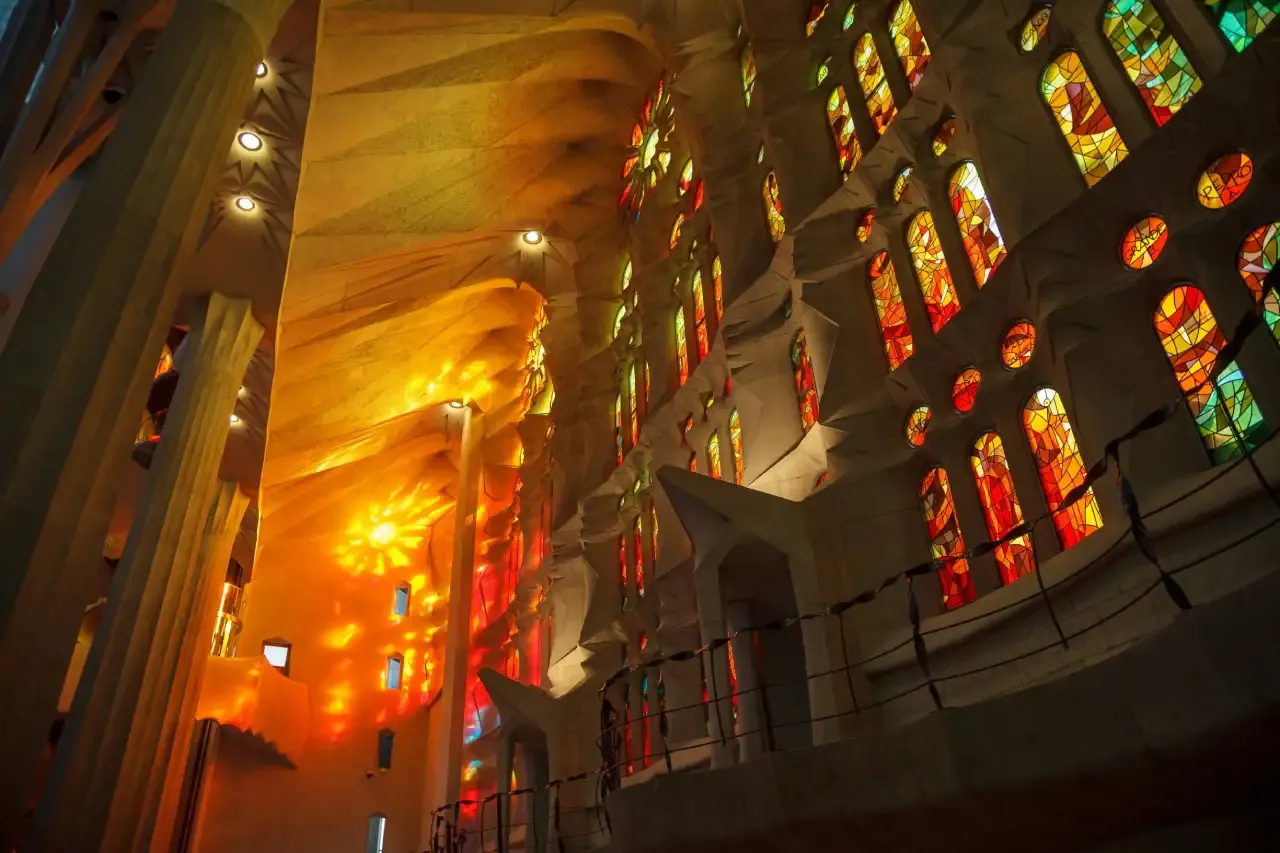
What are the stained glass windows of the Sagrada Familia?
The stained glass windows of the Sagrada Familia are a chromatic installation designed by Joan Vila-Grau to translate Gaudí’s architectural vision into light. They utilize a graduation of colors and tones to create a symbolic atmosphere that shifts throughout the day according to the sun’s path.
Support when you need it
Customer support to help with everything you need, available from 8:00 AM to 7:00 PM.
Fast and online booking
Choose the ticket that best fits your needs and preferences, and avoid the lines by booking here.
Top attraction in Barcelona
Explore the city's most iconic basilica and delve into decades of architectural history.
Gaudí's conception of light in the Sagrada Familia
Contrary to what usually happens in Gothic cathedrals, Gaudí sought maximum contrast by placing the lightest stained glass windows in the highest parts of the temple. This means that light entering the Sagrada Familia illuminates the vaults and the building's various mosaics. At the same time, the texts and figures in the stained glass windows were positioned lower in the space so they could be better appreciated.
In this way, the light in the Sagrada Familia is perfectly integrated into the architecture, and at the same time it imbues the building with meaning, as it both illuminates the temple and conveys spiritual allegories through colorful stained glass, generating powerful emotional effects in visitors.
Thus, the Nativity Façade takes advantage of the dawn light to evoke the birth of Jesus. The Passion Façade is bathed in sunset light, symbolizing Jesus' death. And the Glory Façade achieves an effect of near-constant illumination throughout the day, thereby symbolizing the resurrection.
The images displayed in these stained glass windows of the Sagrada Familia are a visual testament to biblical narrative and Christian values, offering a unique spiritual experience to those who step into this modernist sanctuary. The sunlight filtering through these colorful panels seems to carry a celestial energy, illuminating the sacred space and creating an atmosphere of reverence and contemplation. Every detail, every hue, serves a purpose within the vast design of the Sagrada Familia.
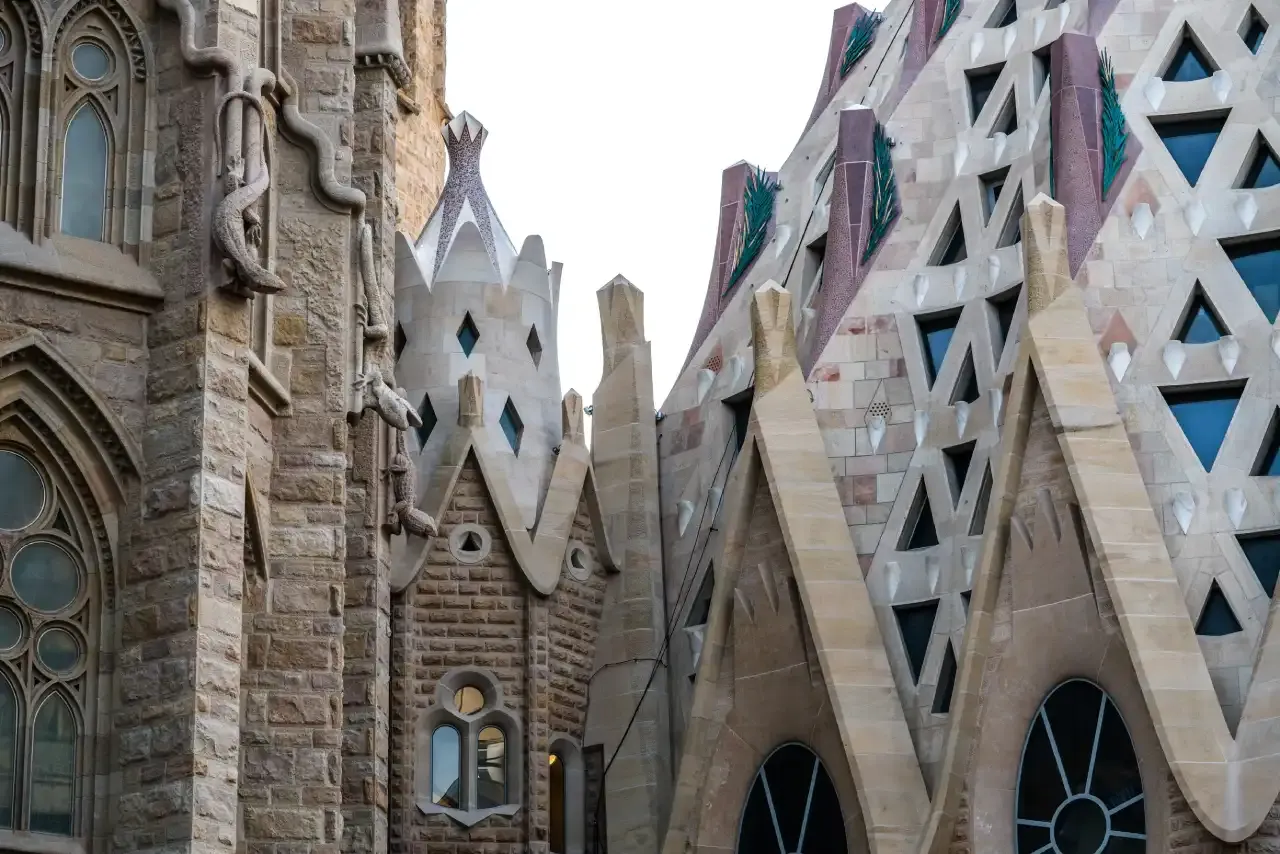
Leaded Glass: the Choice for the Sagrada Familia Stained-Glass Windows
Antoni Gaudí initially considered a trichromatic system for the stained glass but ultimately chose leaded glass to achieve greater structural flexibility and visual rhythm. The lead cames allow the material to expand and move naturally while providing a dynamic framework that organizes the light spectrum. This technique creates a deliberate distribution of light: upper levels use transparent glass with varied textures to illuminate the interior, while the lower levels employ vibrant, multicolored glass to define the atmosphere.
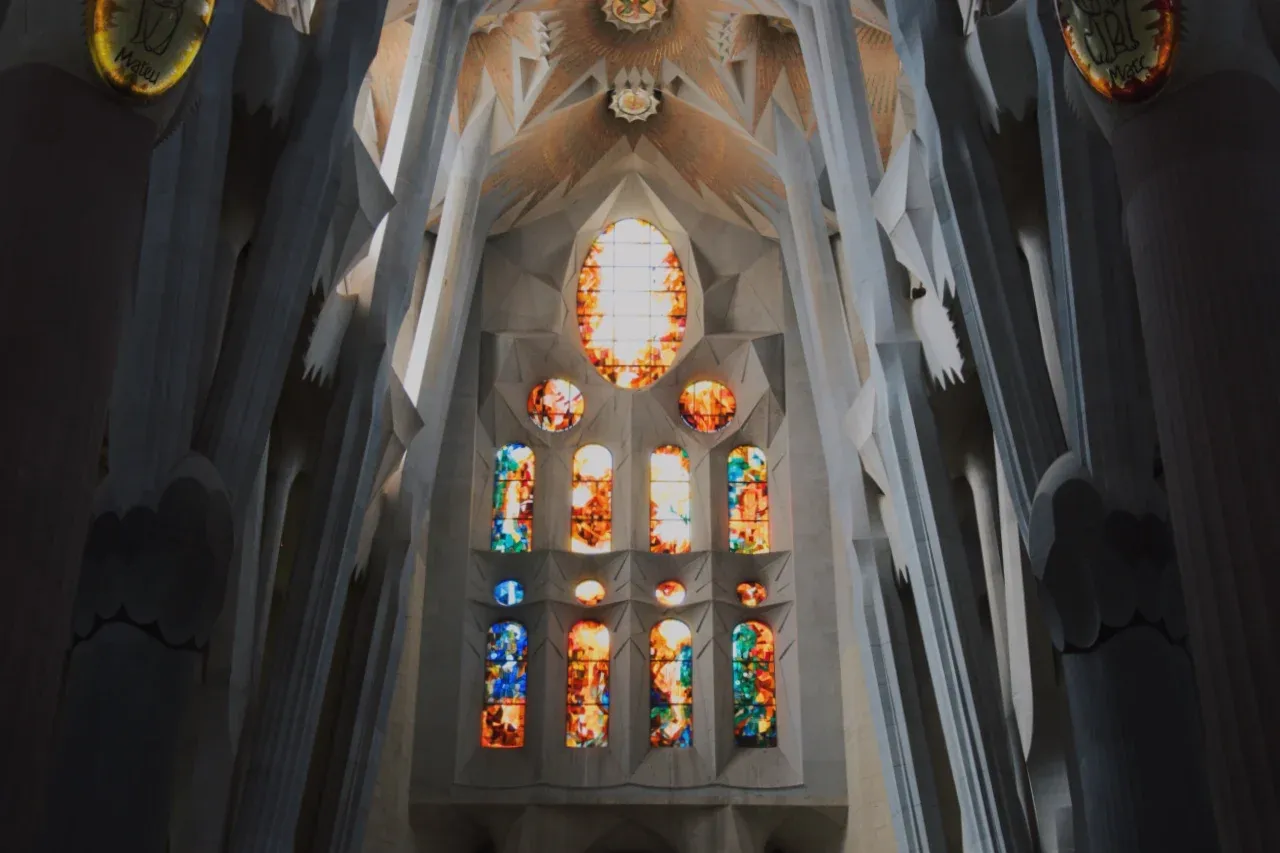
Artistry and Symbolism in the Stained Glass
The artist Joan Vila-Grau employed these leaded structures to create abstract compositions that generate a unique experience for every visitor through light refraction. A prominent example can be found on the Passion façade, where the stained glass of the Resurrection displays a white, ascending figure of Christ integrated into the design.
This combination of material and color ensures that the interior of the basilica undergoes a constant transformation as the sun moves across the sky. By using a non-figurative approach, the artist allows the shifting light to define the space, creating a spiritual atmosphere that evolves from the cool morning tones to the intense, warm hues of the late afternoon.
The Sagrada Familia's Windows and the Solstices
Gaudí’s architectural genius reaches its peak during the winter solstice, producing a magnificent display of light inside the basilica. During this time, the sun’s rays enter the basilica almost horizontally, striking the stained-glass windows nearly perpendicularly. This alignment creates a powerful illumination effect dominated by deep reddish tones that seem to ignite the stone with a warm, fiery glow.
Careful observation shows that each rose window casts its intricate pattern directly onto the opposing vaults, tracing its silhouette onto the stone. This phenomenon unfolds progressively: the reddish hues first touch the floor, then climb the columns, and finally spread in full splendor across the ceiling.
Another extraordinary effect occurs as the sunlight traverses the entire 60-meter width of the nave, reaching the windows on the opposite side. The resulting blend of green and blue tones creates a striking chromatic contrast, highlighting the sophisticated design of master glassmaker Joan Vila-Grau. This spectacle is visible for roughly two weeks before and after the winter solstice, provided the western sky is clear. A similar event occurs on the Nativity façade during the two weeks around the summer solstice.
The collaborative vision of Gaudí and Vila-Grau ensures that the Sagrada Familia’s stained-glass windows offer a constantly evolving experience. Because the light shifts with the hour and the season, each visit brings unique sensations. Within the basilica, this changing light is meant to represent the grandeur of the Resurrection, making every moment inside the temple wholly unrepeatable.