
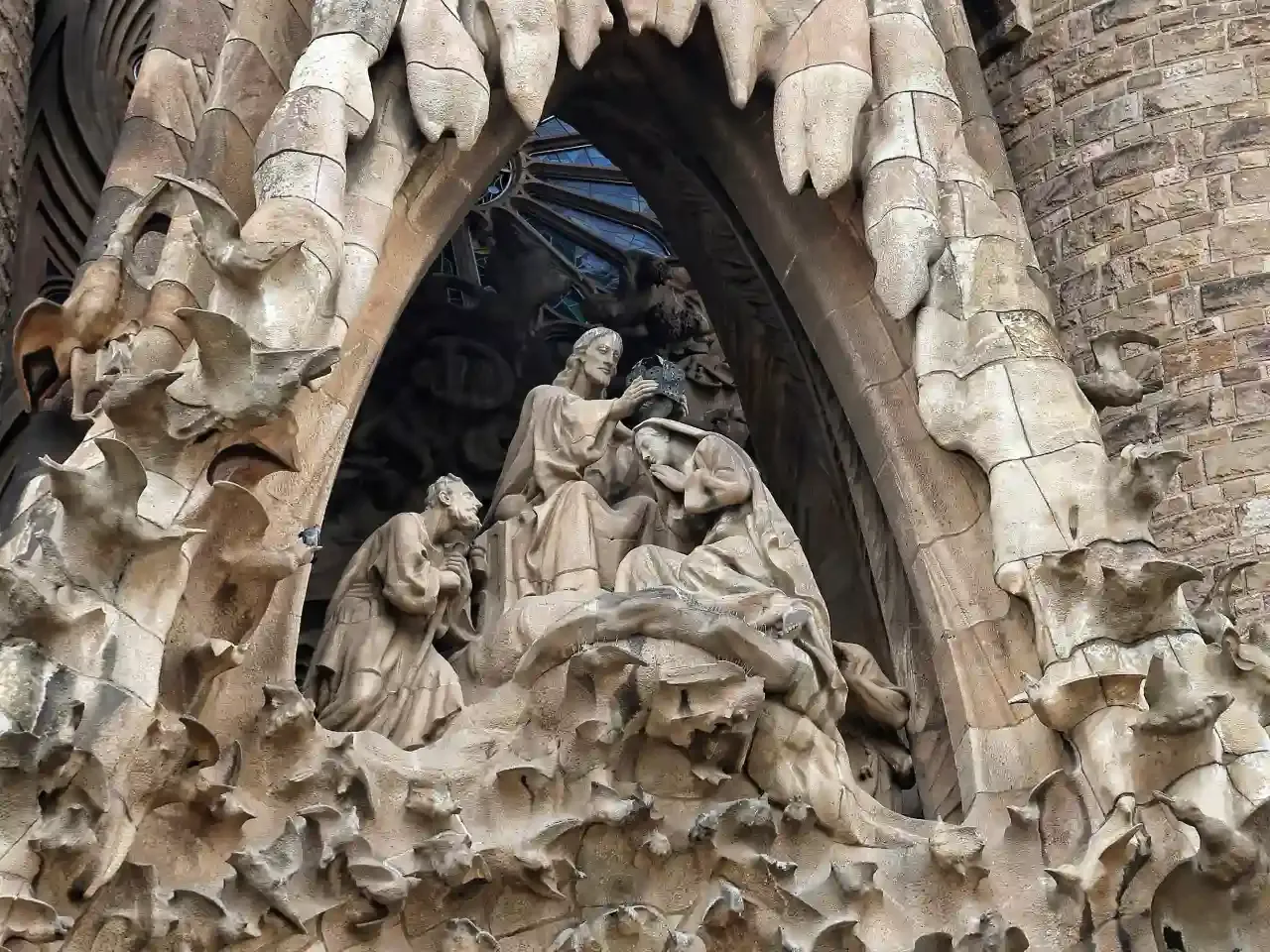
Sagrada Familia Nativity Facade
The Sagrada Familia Nativity Facade is the northeast-facing entrance of the Barcelona basilica, built between 1892 and 1930 under Antoni Gaudí's direct supervision. Three portals dedicated to the theological virtues of Hope, Charity, and Faith contain sculptural scenes depicting Christ's birth. The Nativity Facade and the Crypt are the only parts inscribed as a UNESCO World Heritage Site (2005).
Architecture & authorship
NE-facing entrance built 1892–1930 under Gaudí in naturalistic Art Nouveau style, with 4 bell towers (Matthias, Barnabas, Jude, Simon); only Barnabas (1925) was finished before his death on 10 June 1926.
Tripartite portal structure
Three portals map the theological virtues: Hope (left, St Joseph), Charity (center, Jesus, 33 figures), and Faith (right, Virgin Mary), split by the Column of Jesus and crowned by the Tree of Life.
UNESCO heritage status
The Nativity Facade and the Crypt are the only parts inscribed as UNESCO World Heritage, complementing the basilica's national "Bien de Interés Cultural" designation (1969).
What is the Nativity Facade of the Sagrada Familia?
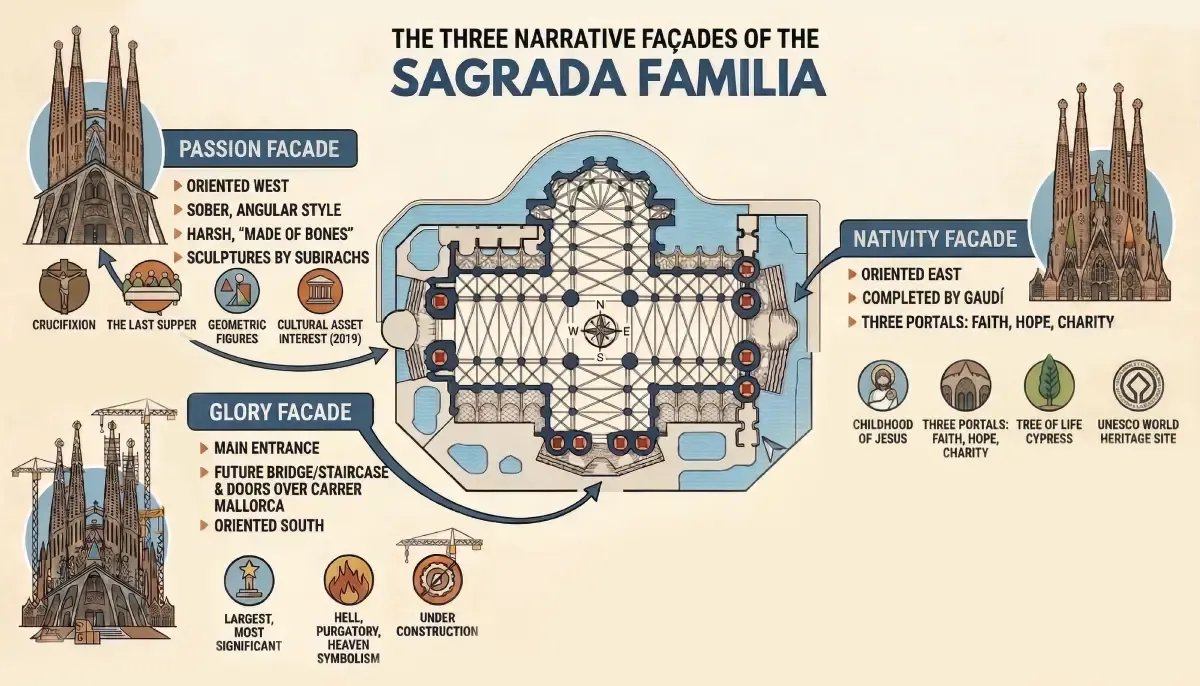
The Nativity Facade (Fachada del Nacimiento) faces the rising sun to the east, symbolizing the birth of Christ. Four bell towers crown the structure, each dedicated to an Apostle: Saint Matthias, Saint Barnabas, Saint Jude, and Saint Simon the Zealot. The Saint Barnabas tower, completed in 1925, remains the only tower Gaudi saw finished before his death in 1926. Gaudi's original design calls for 18 spires in total, representing the 12 Apostles, 4 Evangelists, the Virgin Mary, and Jesus Christ.
What are the three portals of the Nativity Facade?
Three portals divide the Nativity Facade, each dedicated to a theological virtue and a central figure of the Holy Family.
Portal of Hope
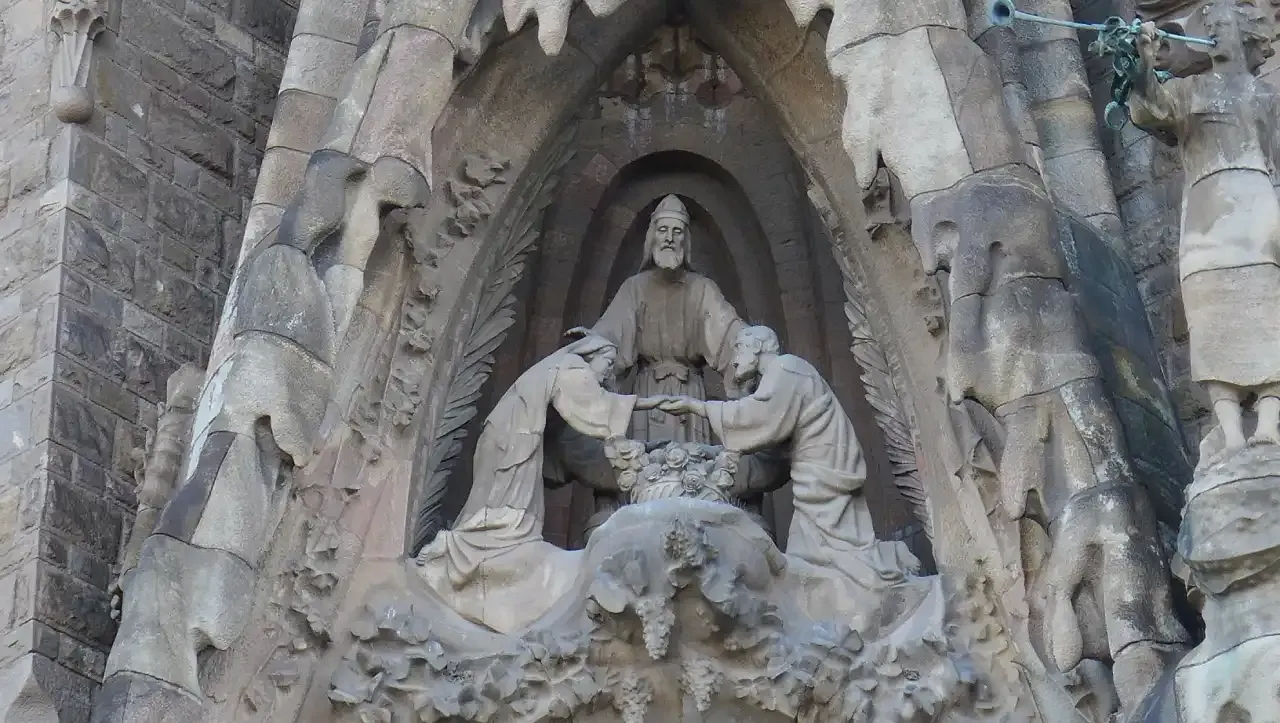
The Portal of Hope occupies the left side of the Nativity Facade, dedicated to Saint Joseph. Five sculptural groups depict episodes connected to the early life of the Holy Family:
- The Flight into Egypt: Joseph, Mary, and the infant Jesus flee Herod's persecution on a donkey.
- The Massacre of the Innocents: A soldier seizes a child while a mother grieves, representing Herod's decree.
- Jesus showing a wounded dove to Joseph: The young Jesus holds an injured bird, symbolizing innocence and compassion.
- The Wedding of Mary and Joseph: The couple stands before a priest in a depiction of their union.
- Saint Joseph's boat: A boat carries four symbolic elements: a rudder (guidance), a dove (peace), an anchor (hope), and a lamp (faith lighting the way).
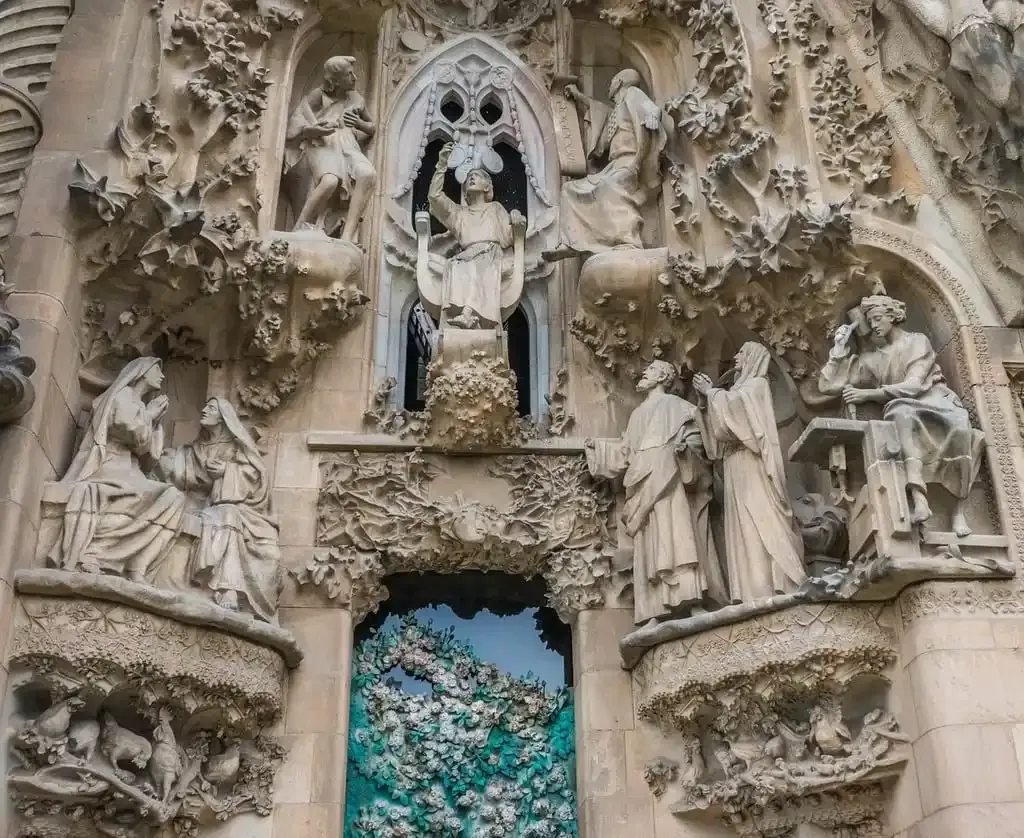
What do the sculptures and symbols on the Nativity Facade mean?
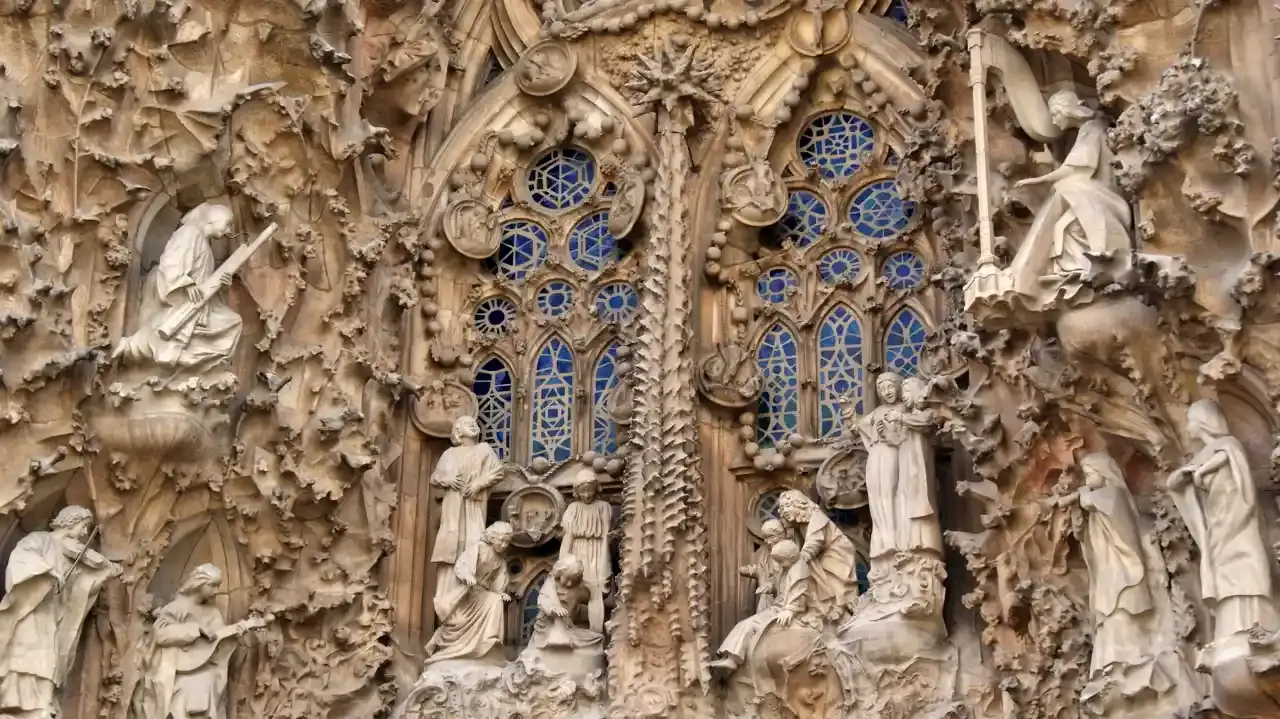
Gaudí drew his design philosophy from nature. Each sculptural element on the Nativity Facade carries a symbolic meaning rooted in Christian theology and the natural world. The principal symbols on the facade include:
- Tree of Life: A cypress tree rising above the Portal of Charity, crowned with a Tau cross (the Greek letter T, a symbol of God the Father). White ceramic doves nest in its branches, representing the souls of the faithful ascending toward heaven.
- Pelican: Positioned near the Tree of Life, the pelican is an ancient Eucharist symbol. Medieval tradition held that the pelican fed its young with blood from its own breast, paralleling Christ's sacrifice.
- Land tortoise and sea turtle: Two different creatures support the columns at the base of the facade. The land tortoise represents the unchangeable (terra firma), while the sea turtle represents Barcelona's maritime identity and constant change. Together, they anchor the facade between permanence and transformation.
- Chameleons: Placed on opposite sides of the facade, chameleons symbolize change and adaptation.
- Ladders: Carved ladders ascend the facade surface, representing the path of virtue and holiness.
Gaudi used live models, plaster casts of corpses, and molds of animals for the sculptures. The interior of the Sagrada Familia continues this organic design with tree-shaped columns and light effects.
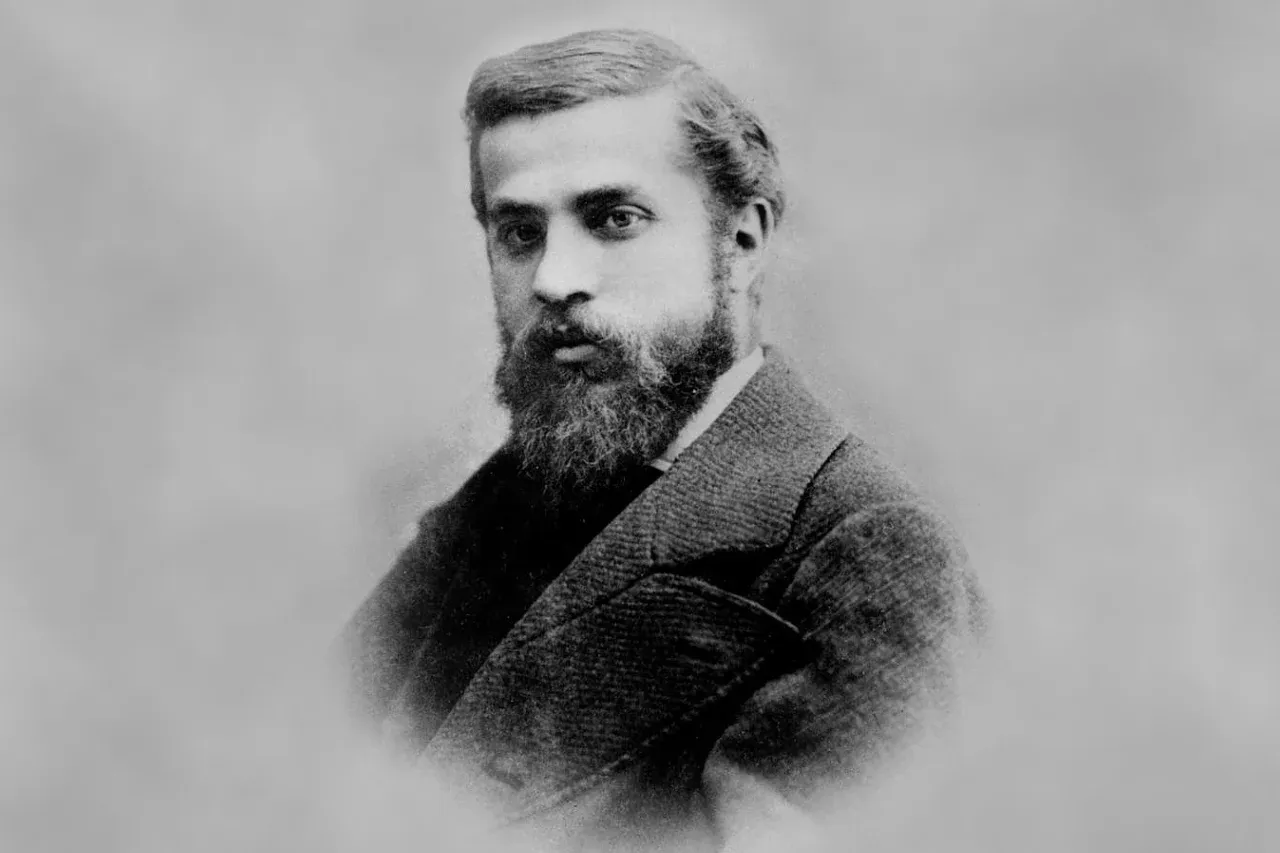
How was the Nativity Facade built and who designed it?
Antoni Gaudí designed the Nativity Facade and began construction in 1892. He completed the first bell tower in 1925, the only one finished before his death in 1926. Domènec Sugranyes continued the work until the Spanish Civil War, during which anarchists destroyed Gaudí's original plans and models. In 1939, Francesc de Paula Quintana resumed the project using saved materials and photographs.
The four towers reached completion in 1930. Successive head architects, including Isidre Puig Boada and Jordi Faulí, carried the work forward. Although the temple trustees obtained a formal building permit in 2019, construction remains ongoing.
What is the difference between the Nativity Facade and the Passion Facade?
The Nativity Facade and the Facade of the Passion sit on opposite sides of the basilica and tell opposing chapters of the Christian narrative: The Nativity celebrates the joy of Christ's birth through ornate, naturalistic sculpture. Angular, stripped-down forms carved in bare stone cover the Passion Facade, depicting Christ's suffering and death.
| Attribute | Nativity Facade | Passion Facade |
|---|---|---|
| Orientation | Northeast (morning sun) | West (afternoon sun) |
| Creator | Antoni Gaudí (architect and designer) | Josep Maria Subirachs (sculptor, from 1987) |
| Construction period | 1892-1930 | 1954-2018 (steeples completed 1976) |
| Artistic style | Naturalistic, ornate, Art Nouveau | Angular, stark, skeletal, bare stone |
| Theme | Birth and joy of Christ | Suffering, crucifixion, and death of Christ |
| Stained glass light | Cool blue-green tones (morning light) | Warm amber-gold tones (afternoon light) |
| Tower saints | Matthias, Barnabas, Jude, Simon the Zealot | James, Bartholomew, Thomas, Philip |
| Unique element | Tree of Life (cypress, Tau cross, doves) | Magic square (rows add to 33, based on Melencolia I) |
When is the best time to see the Nativity Facade?
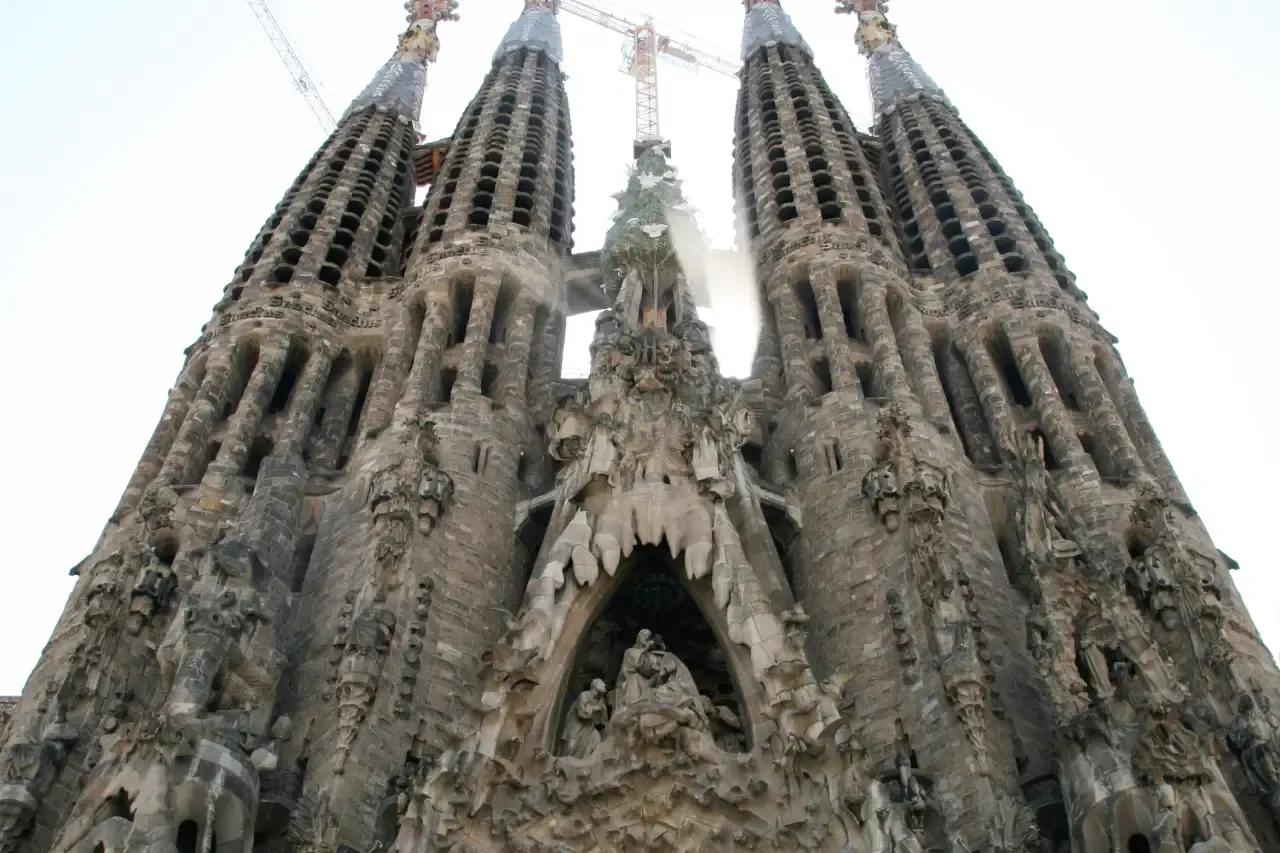
When is the best time to see the Nativity Facade?
The best time to visit and photograph the Nativity Facade is between 9:00 AM and 11:00 AM, when northeast morning sunlight highlights the sculptures and blue-green stained glass. This specific window allows the light to pick out every sculptural detail of the "Stone Forest," while simultaneously filtering through the cool blue and green stained glass windows on this side of the basilica.
Weekdays from 9:00 AM to 10:00 AM offer the perfect combination of optimal natural lighting and significantly lower crowds, especially on Thursdays, which remains the quietest day for visitors. Planning your visit before the peak volume hits at 1:00 PM on Sundays ensures a clearer view of the Three Portals under the most flattering sun.
Why is the Nativity Facade a UNESCO World Heritage Site?
In 1984, UNESCO inscribed three Gaudi buildings in Barcelona under the collective designation “Works of Antoni Gaudi”: Park Guell, Palau Guell, and Casa Mila. The Sagrada Familia was not included in this original inscription. In 2005, UNESCO extended the designation to add four more properties: the Nativity Facade and Crypt of the Sagrada Familia, Casa Vicens, Casa Batllo, and the Crypt of the Colonia Guell in Santa Coloma de Cervello. Seven Gaudi works now hold World Heritage status in total.
The Nativity Facade qualifies because Gaudi supervised its design and construction in person. The 2005 inscription cites Gaudi's “exceptional creative contribution to the development of architecture and building technology.” The Sagrada Familia also holds the national designation of Bien de interés cultural, granted in 1969, and is classified as a Cultural Asset of National Interest.