
Why is the Sagrada Familia not finished?
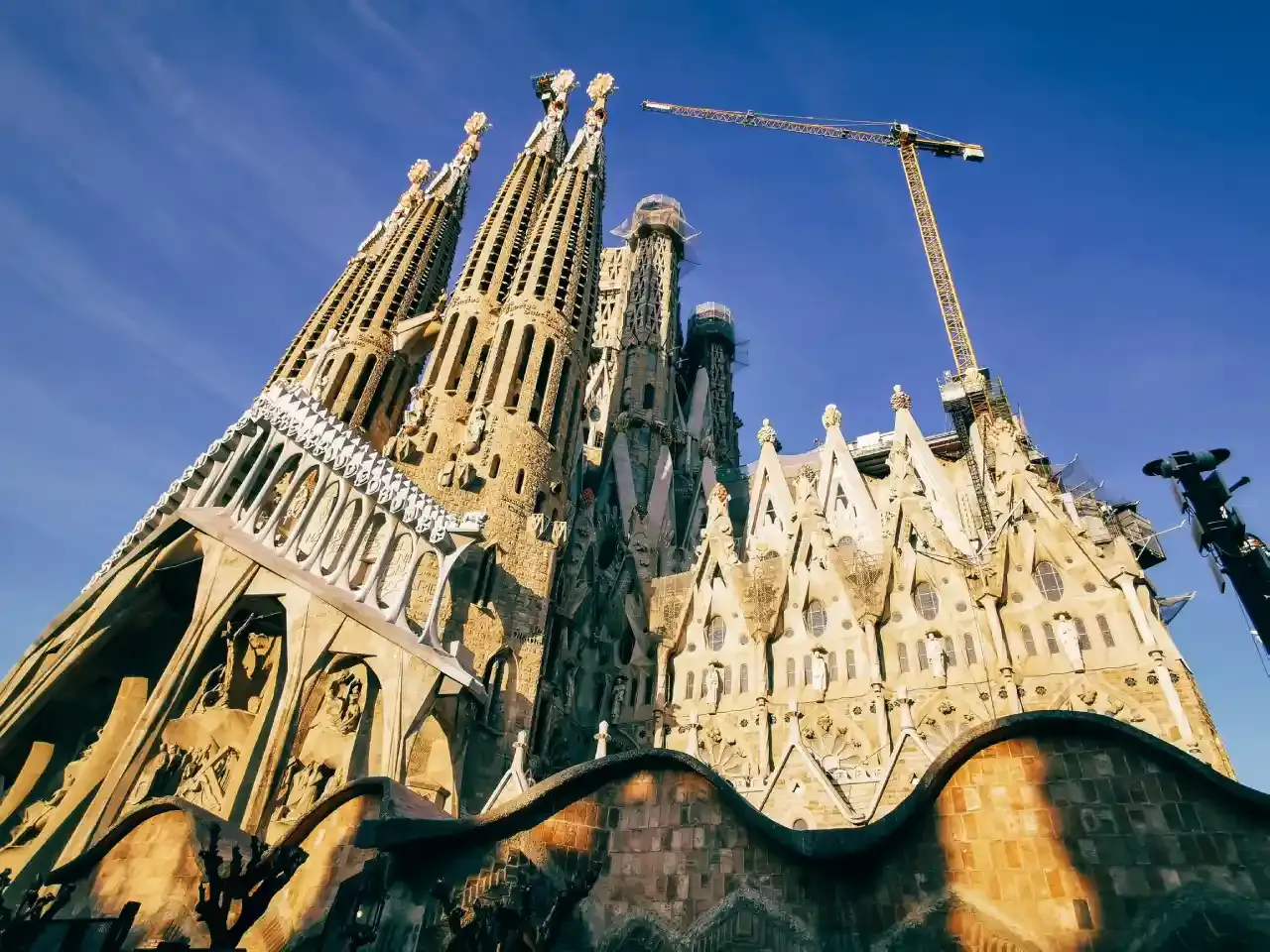
The Sagrada Familia remains unfinished while construction continues on the final spires and the Glory facade. Current architects follow the surviving models of Antoni Gaudí to guide the ongoing structural development.
Support when you need it
Customer support to help with everything you need from 8:00 AM to 7:00 PM.
Fast and online booking
Choose the ticket that suits your needs and preferences, and skip the lines by booking here.
Top attraction in Barcelona
Explore the city's most iconic basilica and delve into decades of architectural history.
Why Sagrada Familia is still under construction?
The Sagrada Familia remains unfinished for four main reasons:
- Antoni Gaudí, the Catalan architect who redesigned the entire project, died in 1926 with only 15-25% of the basilica complete.
- The Spanish Civil War (1936) destroyed Gaudi's original plans, drawings, and plaster models, forcing architects to reconstruct the design from photographs.
- The basilica accepts no government funding. Construction relies entirely on private donations and ticket sales, currently around EUR 25-30 million per year.
- Gaudí's design uses no straight lines. Every stone is unique, requiring custom cutting and engineering that only became feasible with computer-aided design in the 1980s.
How did Sagrada Familia construction begin?
How did Sagrada Familia construction begin?
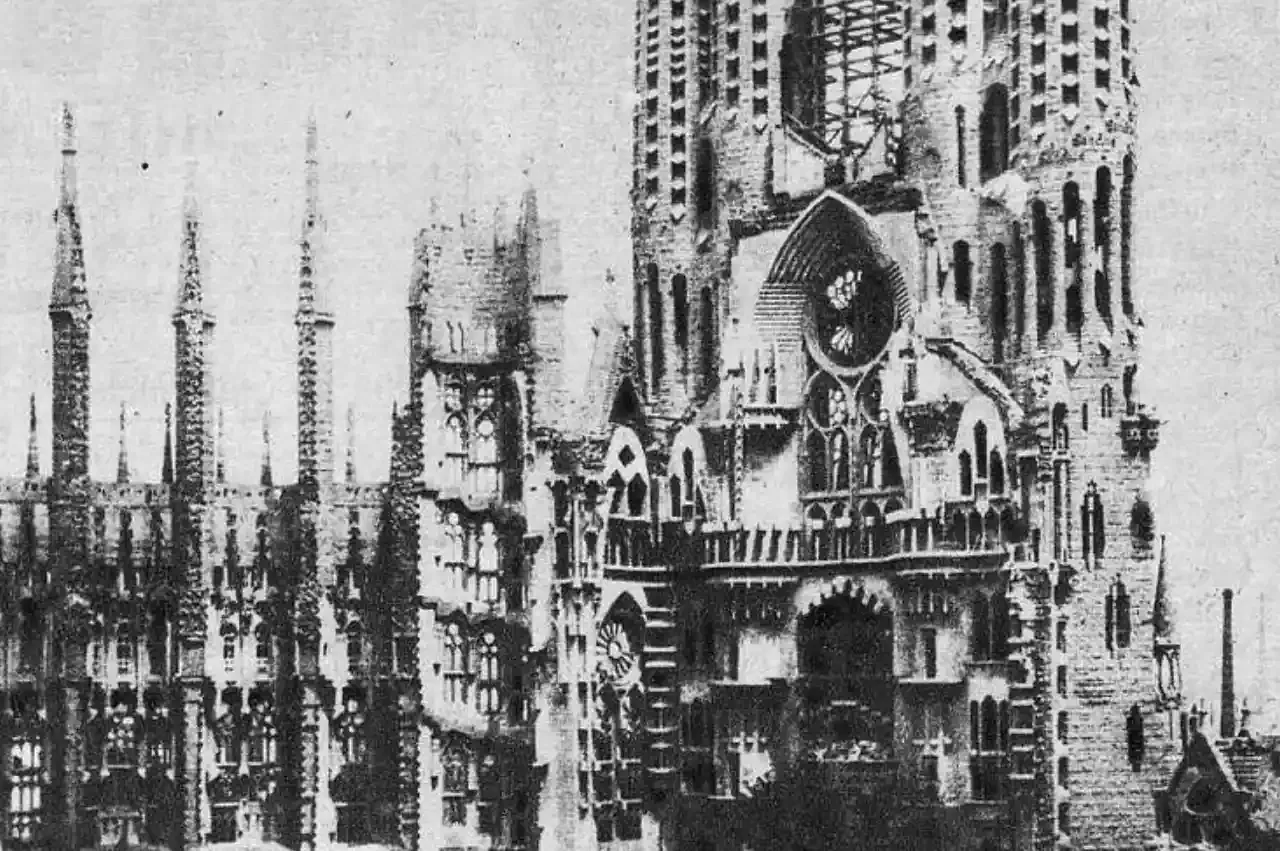
The Sagrada Familia project originated with bookseller Josep Maria Bocabella, who established the Spiritual Association of Devotees of St. Joseph to fund an expiatory temple through private donations. Construction began in 1882 under Francisco de Paula del Villar, who envisioned a standard Gothic Revival church. However, internal disagreements led to Del Villar's resignation just one year later.
In 1883, the committee appointed Antoni Gaudí, a thirty-one-year-old architect with radical ideas, to lead the design. Gaudí formally assumed the role of Architect Director in 1884 and immediately began transforming the conventional plans into an unprecedented architectural feat. This transition from neo-Gothic traditions to Gaudí’s visionary approach remains the most significant turning point in the monument's historical development.
Why the architecture of the Sagrada Familia is so hard to build?
Gaudí's plan called for 18 towers representing the Twelve Apostles, the four Evangelists, the Virgin Mary, and Jesus Christ. The tallest, the Tower of Jesus Christ, was designed to reach 172.5 metres, deliberately shorter than Montjuic hill, because Gaudí believed his creation should not surpass God's work.
The basilica has three grand facades: the Nativity Facade (Fachada del Nacimiento) facing northeast, the Passion Facade (Fachada de la Pasion) facing west, and the Glory Facade (Fachada de la Gloria) facing south, which remains incomplete.
What makes the Sagrada Familia so difficult to build is Gaudí's rejection of straight lines. He worked with hyperbolic paraboloids, helicoids, and hyperboloids,surfaces found in nature but rarely in architecture. The columns inside the basilica start as square bases, evolve into octagons, then sixteen-sided forms, and finally circles as they rise. Each column is essentially a three-dimensional intersection of helicoidal shapes twisting in opposite directions.
Gaudí used hanging chain models,weighted strings suspended upside down,to determine the ideal shapes for arches and vaults. These inverted catenary curves produced structurally sound forms but were nearly impossible to document fully with the drafting technology of the early 1900s. He knew that future builders would need to interpret his vision from fragments.
To understand Gaudí's geometric design principles is to understand why the basilica took so long: no other building on earth uses these structural forms at this scale.
Gaudí's death in 1926: the project loses its architect
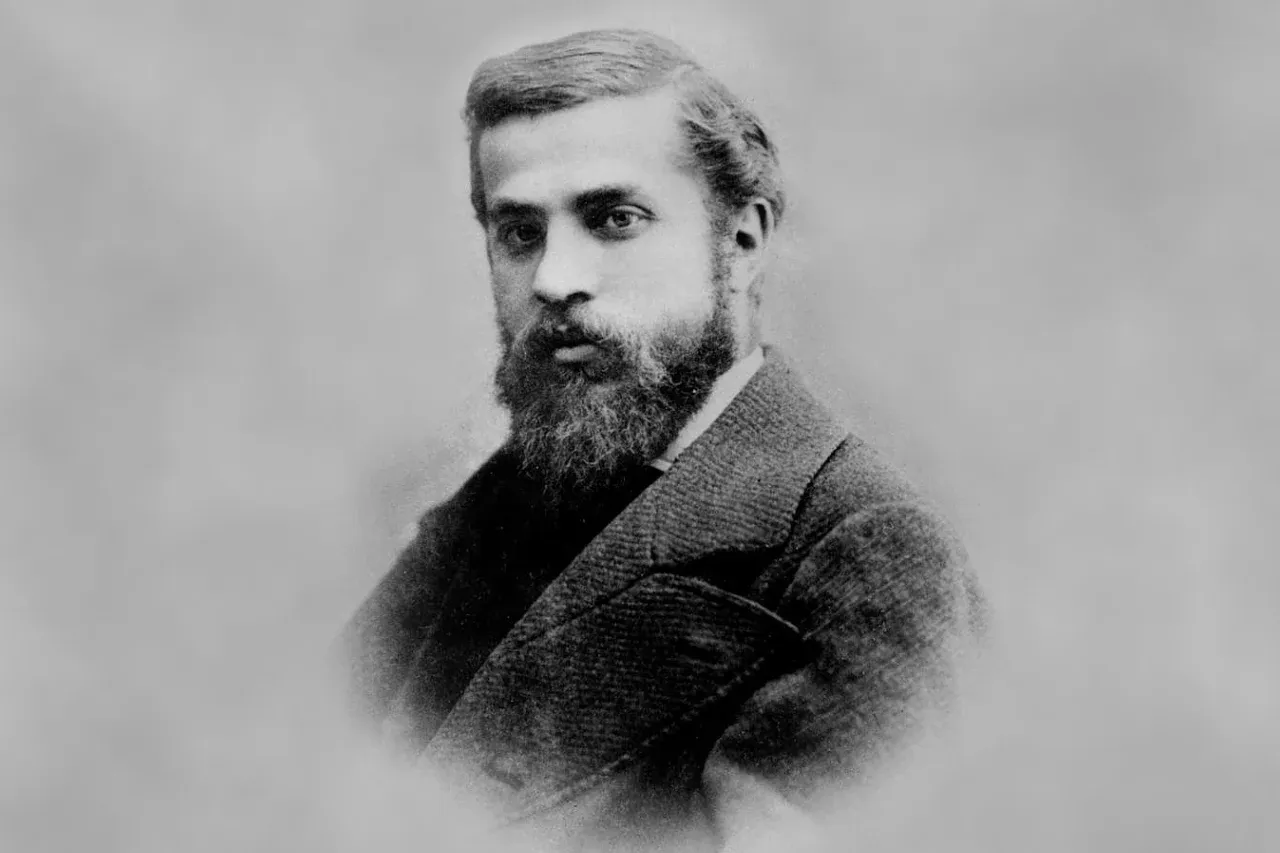
On 10 June 1926, Gaudí was struck by a tram while walking to his daily confession at the Church of Sant Felip Neri. He died three days later at age 73. He had devoted the final 43 years of his life exclusively to the Sagrada Familia, living in a workshop on the construction site. He was buried in the crypt chapel of Our Lady of Carmel beneath the basilica, where his tomb remains today.
Gaudi had left behind plaster models, sketches, and a partially documented vision,but no comprehensive construction plan. The project's future depended on whether successors could interpret what he intended. His main disciple, Domenec Sugranes i Gras, took over and continued work until 1936.
The Spanish Civil War
In July 1936, anarchists from the FAI (Federación Anarquista Ibérica) set fire to the crypt and broke into Gaudi's workshop. They burned his original drawings, smashed his plaster models, and destroyed the moulds he had built to guide future construction. What survived was fragmentary, photographs, published plans, and a few rescued models.
The damage went beyond physical destruction. Without Gaudi's detailed models and notes, architects had to reverse-engineer his design from limited evidence. Construction halted entirely during the Spanish Civil War (1936-1939).
In 1939, Francesc de Paula Quintana assumed site management. Working with the salvaged material and published plans, he began the painstaking process of reconstruction. The work continued under a succession of architects: Isidre Puig i Boada, Lluis Bonet i Gari, Francesc Cardoner i Blanch, Jordi Bonet i Armengol, and since 2012, current head architect Jordi Fauli.
Funded by donations only
From its inception, the Sagrada Familia was conceived as an expiatory temple,a building funded entirely by the faithful. No public subsidy, no government grant, no institutional funding has ever supported the construction.
For the first 70 years, progress depended on charitable donations that fluctuated with Spain's economic conditions. In 1952, the foundation introduced entry ticket sales as a revenue source, which gradually became the primary funding mechanism.
Today, the basilica generates approximately EUR 25-30 million per year from ticket revenue, drawn from around 4 million annual visitors. This budget funds all construction, restoration, and maintenance. By comparison, large-scale institutional construction projects of similar complexity typically command budgets several times higher with government backing.
The funding model explains the pace: construction accelerates when tourism booms and slows during disruptions. The COVID-19 pandemic, which reduced visitor numbers to zero for months, demonstrated this vulnerability directly.
Modern technology speeds things up (2000-present)
Construction that took decades in the 20th century now advances in years, thanks to computer-aided design and manufacturing. From the 1980s onward, architects began using CAD software to model Gaudí's complex geometric forms,the hyperbolic paraboloids and helicoids that had been nearly impossible to translate from his plaster models into engineering drawings by hand. CNC (Computer Numerical Control) stone cutting replaced manual carving, and 3D printing enabled rapid prototyping of structural elements.
The central nave, transept, and apse were completed in 2010, in time for Pope Benedict XVI to consecrate the church as a minor basilica on 7 November of that year, in front of 6,500 people inside and 50,000 outside.
Progress since then has been steady:
| Date | Event |
|---|---|
| 2021 | The Virgin Mary tower reached 138 metres, inaugurated on 8 December with a mass and the first lighting of its star. |
| 2022–2023 | The four Evangelist towers (Luke, Mark, Matthew, and John) were completed at 135 metres and inaugurated on 12 November 2023. |
| 30 October 2025 | The Sagrada Familia became the world's tallest church when the central tower reached 162.91 metres, surpassing Ulm Minster in Germany (161.53 m). |
| 20 February 2026 | The Tower of Jesus Christ reached its final height of 172.5 metres, completing the exterior of the basilica's tallest structure. |
When will the Sagrada Familia be finished?
The current projection targets completion around 2033, the centenary of Gaudi's death. However, "finished" requires some qualification.
The structural elements of the basilica are largely complete. The six central towers are either finished or nearing completion. What remains is the Glory Facade, the main ceremonial entrance facing south on Carrer de Mallorca. This is the most complex facade, and its construction involves a significant urban planning challenge: the planned entrance stairway may require the demolition of two city blocks that are currently home to approximately 1,000 residents and several businesses.
Work on sculptures, decorative details, and the controversial entrance stairway is expected to continue until at least 2034. The stone for these final phases comes from quarries around the world, including the Withnell Quarry in Brinscall near Chorley (England), as well as sites in Scotland, Galicia, and Cantabria, selected to match the original Montjuic sandstone after the Barcelona quarries closed and the hillside was repurposed.