The columns of the Sagrada Familia
The columns of the Sagrada Familia are designed to function like a stone forest, branching out to support the roof's weight. Here's how Gaudí used varied materials and tree-like structures to eliminate the need for traditional external supports.
Support when you need it
Customer support available to help you with anything you need from 8:00 AM to 7:00 PM.
Fast online booking
Choose the ticket that fits your needs and preferences, and avoid the lines by booking here.
Top attraction in Barcelona
Explore Barcelona's most iconic basilica and delve into decades of architectural history.
Continuing his inspiration from nature
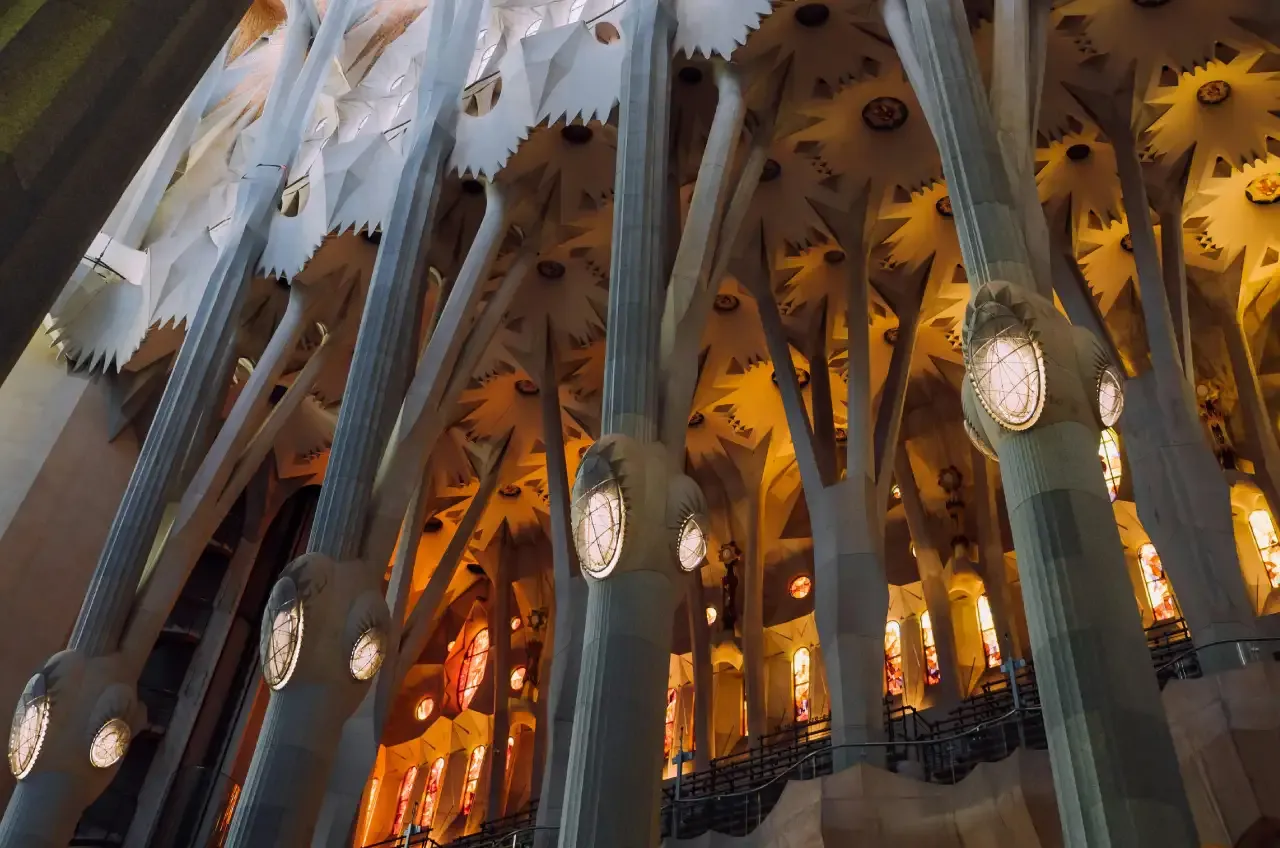
Inspired by the organic forms of nature, Gaudí conceived the columns of the Sagrada Família as monumental trees rising from the earth toward the sky. Within the basilica, there are a total of 36 main columns that form the structural "forest" of the interior. Each pillar carries a specific symbolic weight, reflected in the dedicated lanterns they support. Within this sacred space, the four central pillars of the transept honor the Evangelists, while twelve columns represent the Apostles. The remaining structures are dedicated to four Catalan bishoprics, the five continents, and fifteen Spanish archdioceses, creating a structural map of the global and local church.
To maintain perfect proportions, the architect established four distinct heights for these stone trunks, with wall depths ranging from 12 to 24 meters to match their structural importance. Avoiding conventional architectural designs, Gaudí developed a geometric innovation known as the "double-twist column." This genius invention features a star-shaped base that rotates as it ascends, transforming into a circular profile. This unique design allows the columns to support the immense weight of the vaults with a graceful, spiraling aesthetic that mimics the natural growth of a forest.
The Innovation of the Double-Twist Column
Gaudí developed the structural solution for the columns of the Sagrada Familia through an empirical process, refining existing architectural concepts into something entirely unique. The design of these "double-twist" columns can be understood by imagining a star-shaped template with rounded points sliding down a cylinder. If the template moves only vertically, it creates straight grooves; however, by rotating the template as it descends, it produces helical grooves similar to a traditional Solomonic column. Gaudí’s stroke of genius was to introduce a second rotation in the opposite direction, producing the complex, intersecting geometry of the double twist.
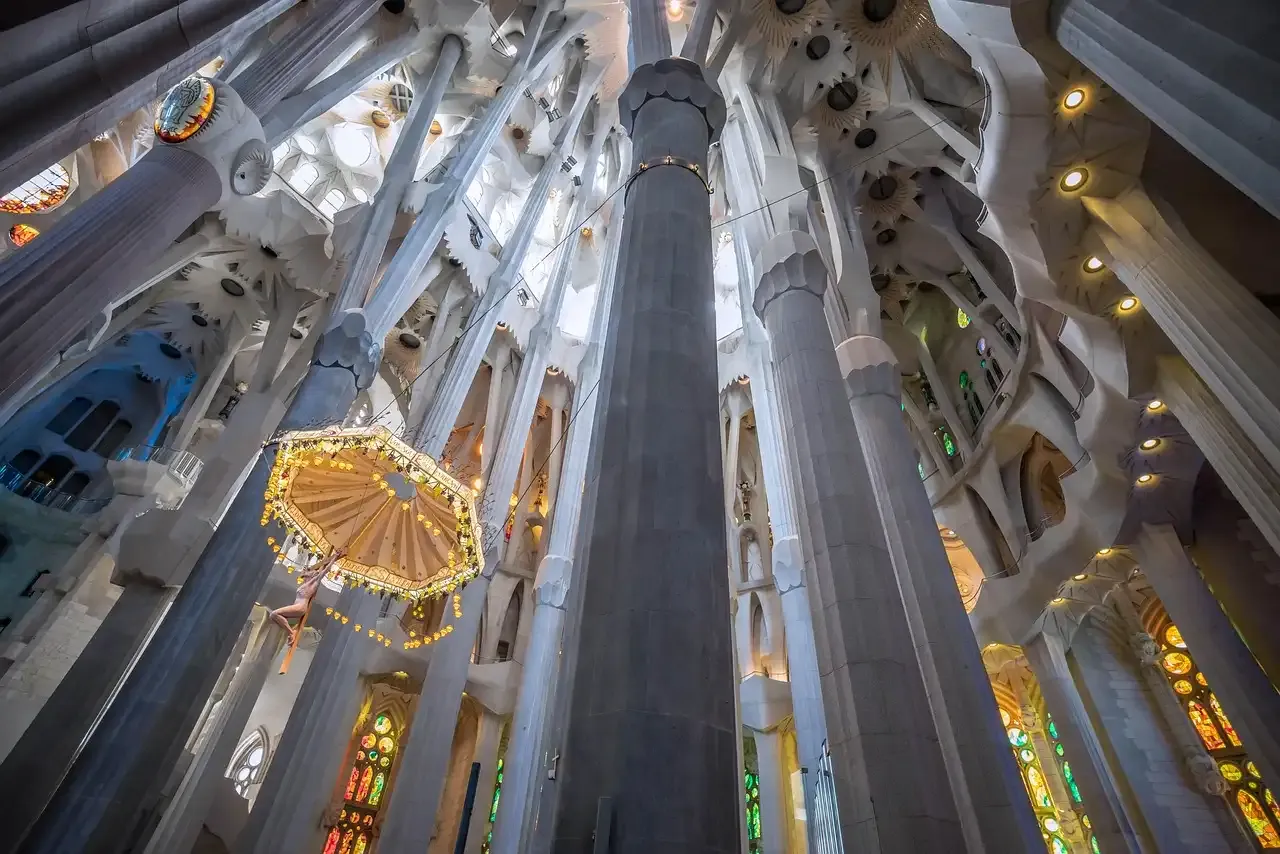
This geometric innovation serves both a functional and an aesthetic purpose. Every column begins with a star-shaped base and gradually transitions into a circular section as it reaches the top. To enhance the visual impact, the columns taper as they rise, creating a pronounced sense of slenderness and elegance. This sophisticated transition allows the stone "trunks" to blend seamlessly into the branching vaults above, completing the illusion of a monumental, petrified forest that is as structurally sound as it is visually captivating.
Symbolism in the Columns of the Sagrada Família
For Gaudí, every architectural element served a higher purpose, and the columns of the Sagrada Família are no exception. The specific transition from a star-shaped base to a circular top through helical movements represents the profound relationship between heaven and earth. This upward-spiraling geometry acts as a visual bridge, connecting the temple's terrestrial foundations to the celestial vaults above.
Within this "forest of stone," the double-twist design carries a deeply poetic meaning related to the saints and dioceses to which many pillars are dedicated. The intersecting rotations can be interpreted as the descent of angels to Earth, arriving to gather the saints and guide them toward the heavens.
Hierarchy of the Columns of the Sagrada Família
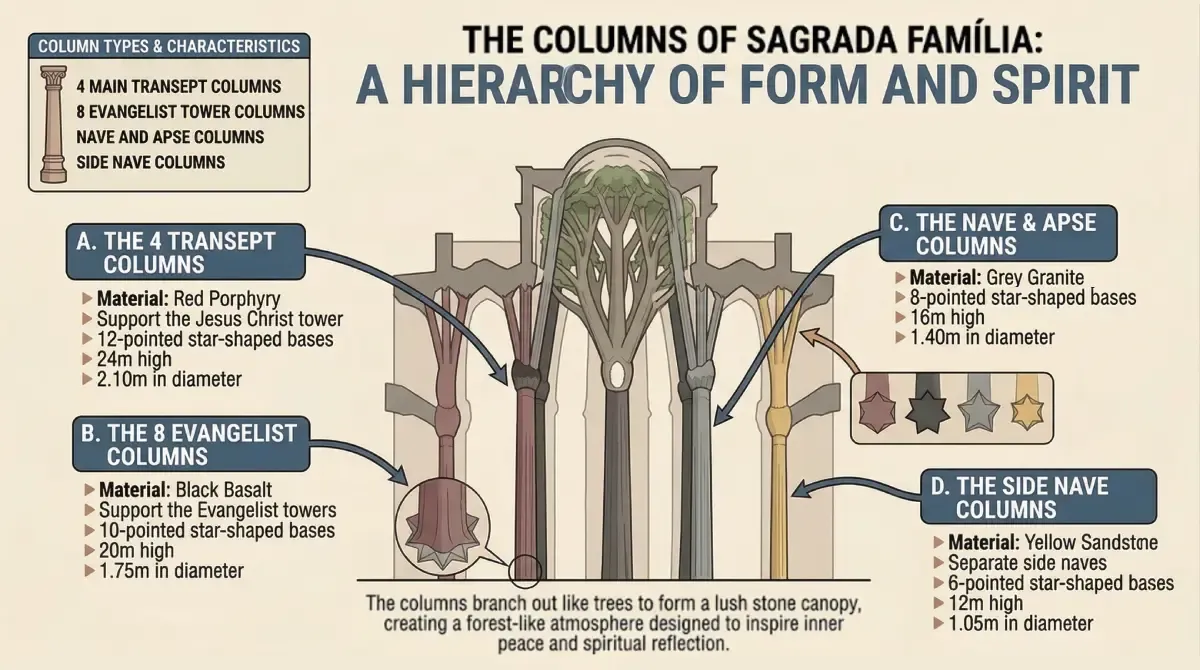
The columns of the Sagrada Família are organized in a strict structural and symbolic hierarchy determined by the load they support. This ranking is visible through the number of points in their star-shaped bases, their dimensions, and the specific colors of the stones used. At the highest level are the four central pillars of the transept, which support the massive Tower of Jesus Christ. These columns are crafted from red porphyry, feature 12-pointed star bases, and reach a height of 24 meters with a diameter of 2.10 meters.
| Column Type | Transept (Main) |
|---|---|
| Material | Porphyry |
| Color | Red |
| Base Shape | 12-pointed star |
| Height | 24 m |
| Diameter | 2.10 m |
| Column Type | Evangelist Towers |
|---|---|
| Material | Basalt |
| Color | Black |
| Base Shape | 10-pointed star |
| Height | 20 m |
| Diameter | 1.75 m |
| Column Type | Nave and Apse |
|---|---|
| Material | Granite |
| Color | Grey |
| Base Shape | 8-pointed star |
| Height | 16 m |
| Diameter | 1.40 m |
| Column Type | Side Naves |
|---|---|
| Material | Sandstone |
| Color | Yellow |
| Base Shape | 6-pointed star |
| Height | 12 m |
| Diameter | 1.05 m |
Following this hierarchy, the eight columns supporting the Evangelist Towers are made of black basalt with 10-pointed bases. The granite columns of the nave and apse, which support the Tower of the Virgin Mary, feature 8-pointed bases and a grayish tone. Finally, the sandstone columns separating the side naves are the smallest, with 6-pointed bases and a yellowish hue. As these pillars ascend, they branch out like trees to form a lush stone canopy, creating a forest-like atmosphere designed to inspire inner peace and spiritual reflection in every visitor.