
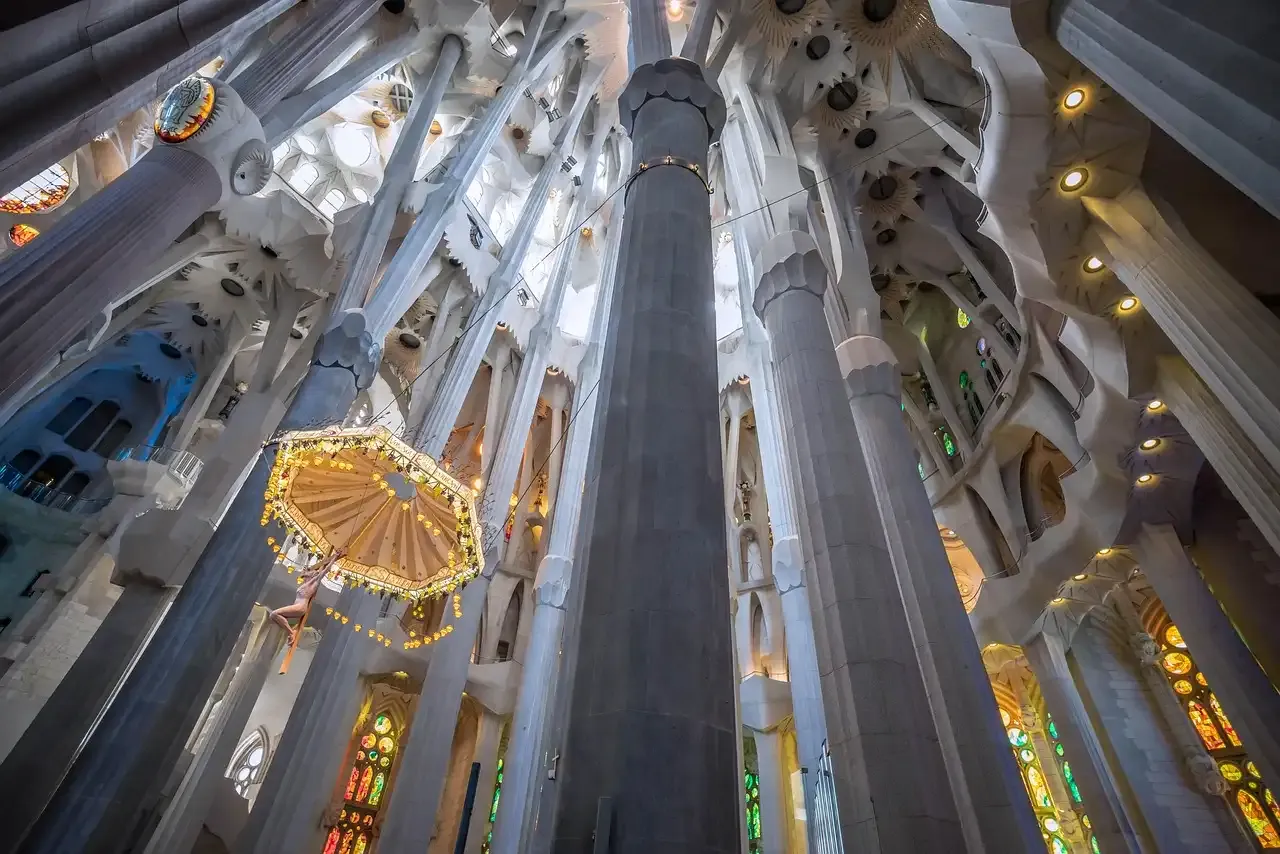
What is the geometry of the Sagrada Familia like?
The geometry of the Sagrada Familia is based on ruled surfaces like hyperboloids, parabolas, and helicoids found in nature. Here's how these unique forms allow the building to support its own weight without the need for the heavy external stone arches seen in traditional cathedrals.
Support when you need it
Customer support to help you with everything you need from 8:00 AM to 7:00 PM.
Fast online booking
Choose the ticket that fits your needs and preferences, and skip the lines by booking here.
Top attraction in Barcelona
Discover the city's most iconic basilica and delve into decades of architectural history.
Differences Between Its Architecture and Its Geometry
Geometry and architecture are two concepts that are intimately linked. This is demonstrated by the large number of structures built over time. The Great Pyramid of Giza and the Parthenon were designed according to the number pi. During the Renaissance, the great architects, sculptors, and painters used the golden ratio as the geometric basis for their works, as in the case of Leonardo da Vinci. Gaudí was no exception.
Gaudí conceived geometry as a resource that favored the design of construction processes and sought to make the most of traditional formulas to achieve stability in the structures he conceived. All of this was combined with a strong element of symbolism and a deep respect for nature.
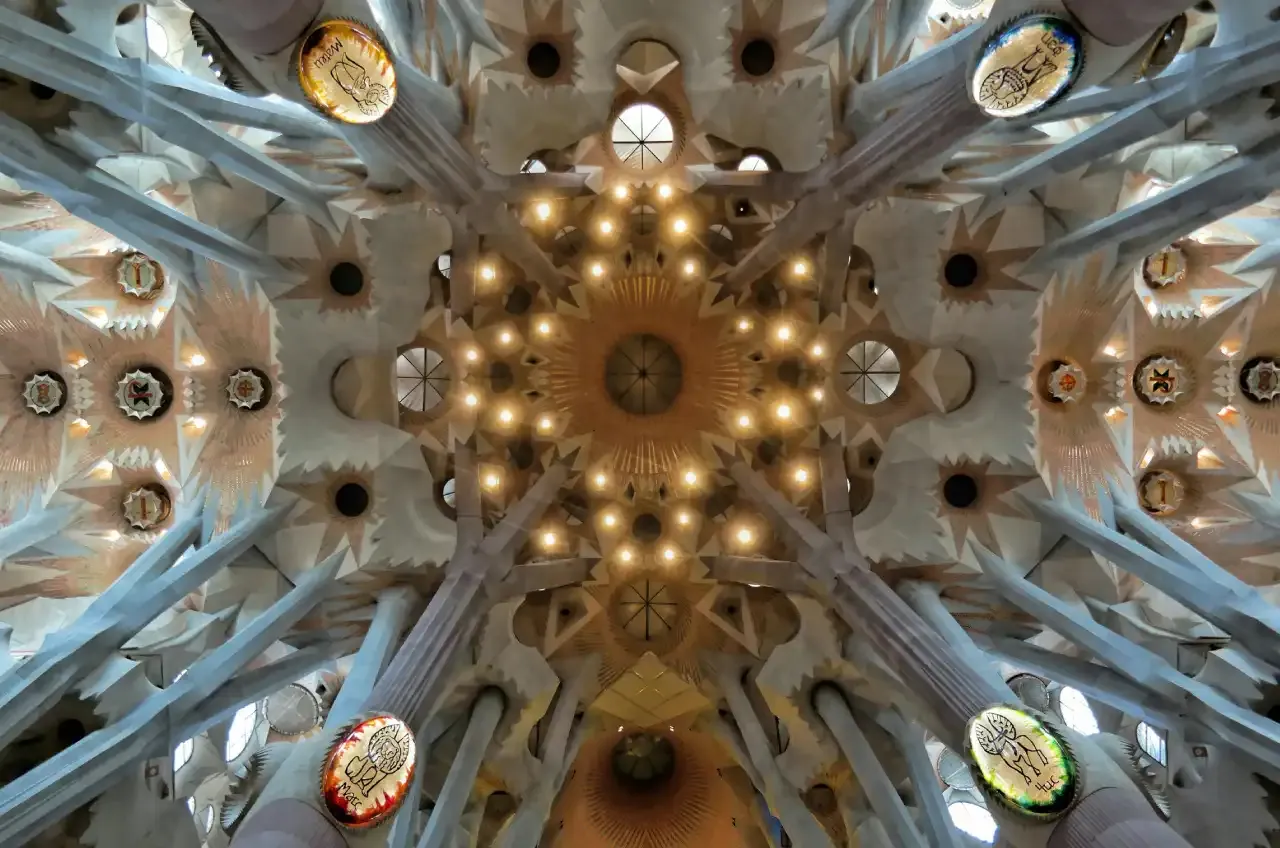
The geometry of the Sagrada Familia as a structural concept
Antoni Gaudí meticulously planned the geometry of the Sagrada Familia shortly after receiving the commission, establishing both the structural and dimensional framework of the temple. The façades reflect a deliberate transformation from traditional Neo-Gothic styles toward a striking modernism driven by geometric innovation.
This evolution is visible in the transition from standard pointed windows on the lower levels to composite rose windows featuring central oculi surrounded by hyperbolic openings, eventually reaching the upper windows organized with harmonious elliptical rosettes.
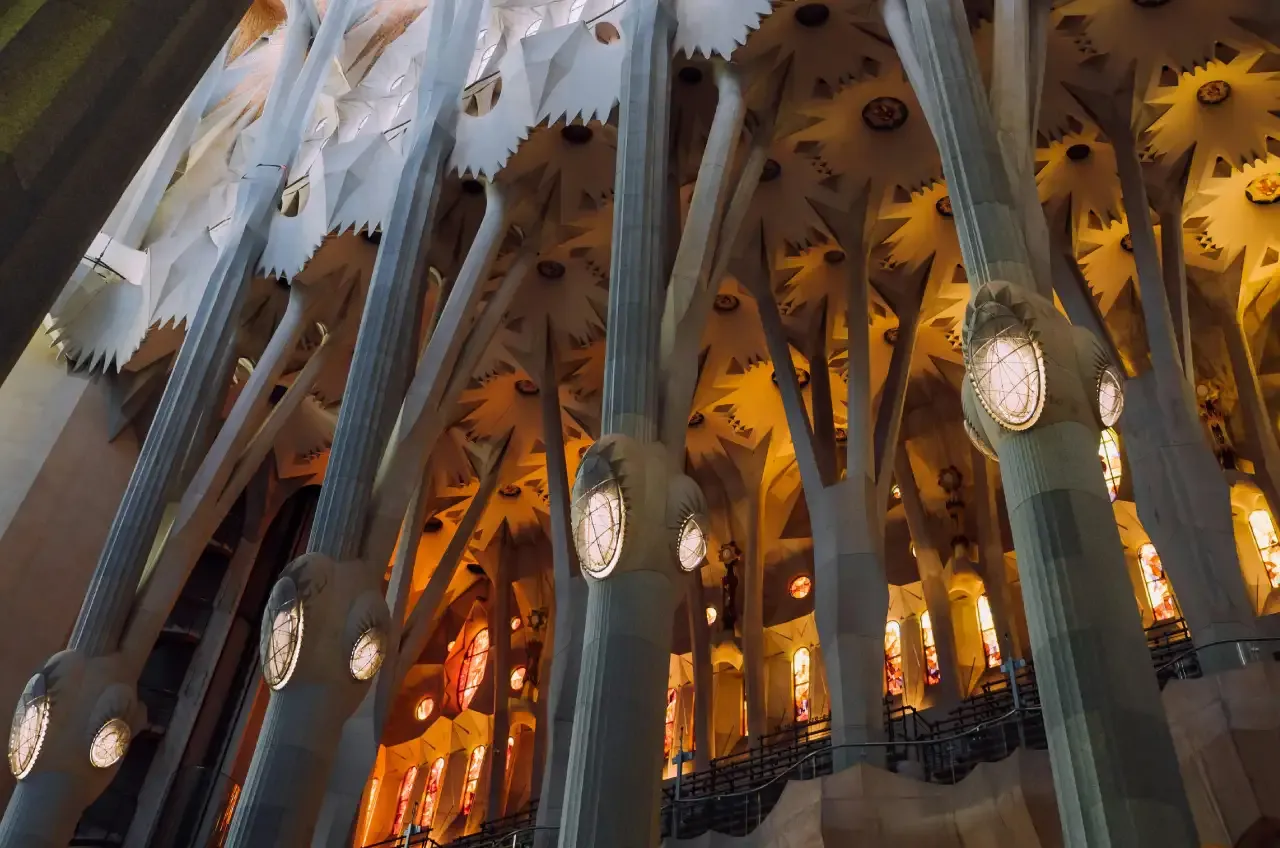
Ellipsoids in columns
Nature served as the primary blueprint for Gaudí’s work, and the geometry of the Sagrada Familia provides clear evidence of this organic inspiration. The interior columns of the nave are designed to symbolize the growth of monumental trees, utilizing the ellipsoid as a sophisticated double-turn structural element.
By starting with a star-shaped base and rotating the profile from right to left as it ascends, the column gradually transitions into a perfect circle. This mathematical progression creates a captivating visual rhythm while ensuring exceptional load-bearing stability for the massive structure above.
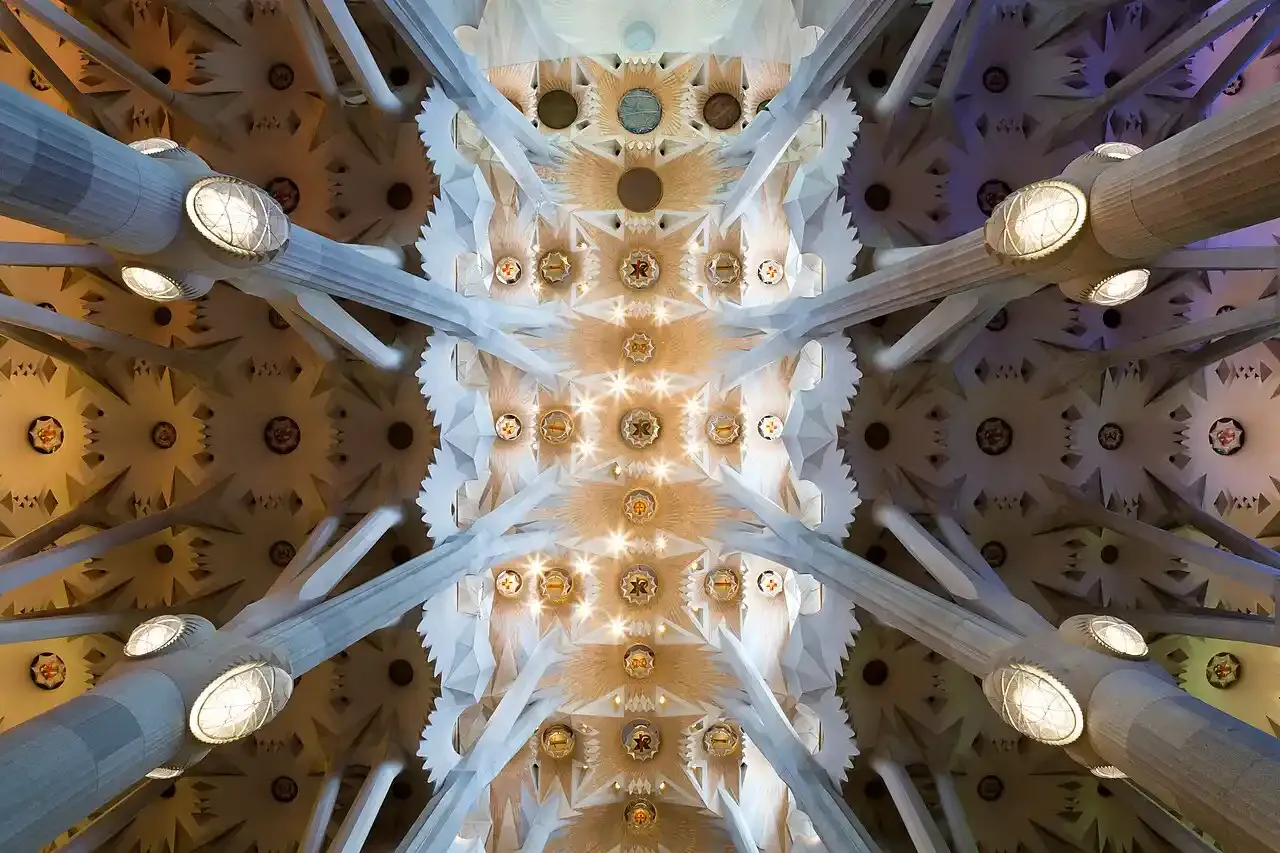
Paraboloids, one of the predominant forms of the Sagrada Família
Paraboloids are one of the most dominant forms in the geometry of the Sagrada Família. They appear as warped surfaces formed when a straight line moves between two other lines that cross in space. Gaudí drew inspiration for these shapes from nature, notably observing them at the base of tree trunks where structural strength is most critical.
In the basilica, he used this form to create seamless connecting surfaces between the vaults and the columns of the Passion façade, as well as in the sacristy dome and in various towers.
Photo: “Barcelona - Sagrada Família - Ceiling - 2016” by Avda.
The number 12 as a special symbol in the Sagrada Familia
There were 12 apostles of Jesus, and consequently this number is very present in the geometry of the Sagrada Familia. Gaudí used it as the basis for many of the temple’s proportions. For example, if you divide the total length of its floor plan (90 m) by 12, the result is 7.5. This measurement governs the entire floor plan of the temple: the columns are spaced by this distance, the width of the central aisle is twice that distance, the total width of the entrance doors is four times that distance… And so on.
All the proportions of the structural elements are based on the divisors of 12; in this way the symbolism of the Sagrada Familia is conveyed. The symbolism of the Holy Family is represented by the Lord’s apostles.