
Can you take photos inside the Sagrada Familia?
Visitors may take photos inside the Sagrada Familia for personal use. The following details provide guidance on photographing the interior while respecting all official regulations.
Support when you need it
Customer support to help you with everything you need, from 8:00 AM to 7:00 PM.
Fast online booking
Choose the ticket that fits your needs and preferences and skip the lines by booking here.
Top attraction in Barcelona
Explore Barcelona's most iconic basilica and delve into decades of architectural history.
Is it possible to take photos inside the Sagrada Familia?
Yes, it is possible to take photos inside the Sagrada Familia for personal use. Visitors may photograph the interior’s light and architecture, but they must avoid using tripods or professional equipment without prior authorization. Maintaining a respectful atmosphere is important, as the basilica is an active place of worship.
Ethical and safety guidelines
To ensure a respectful and safe environment when taking photos inside the Sagrada Familia, please follow these rules:
- Prohibited Equipment: Tripods of any kind, including flexible mini-tripods, are not allowed. Photography using tablets is also restricted for safety and crowd-flow reasons.
- Access Restrictions: Bulky backpacks are not permitted inside the building to maintain security and space for all visitors.
- Lighting and Sound: The use of flash is strictly forbidden. Additionally, avoid loud or rapid shutter sounds, as the noise can interfere with the prayers of pilgrims visiting the basilica.
- Time Management: Since tickets for the Sagrada Familia include a scheduled entry time, consider using the time before your appointment to photograph the exterior.
- Equipment Storage: Large professional photography gear or improvised selfie sticks may not be allowed past the security checkpoints.
Where to take photos at the Sagrada Familia?
Identifying the best locations to take photos of the Sagrada Familia requires an understanding of both the exterior architecture and the internal light. These specific points offer the most representative views of the basilica’s unique structural and symbolic elements:
Inside the basilica
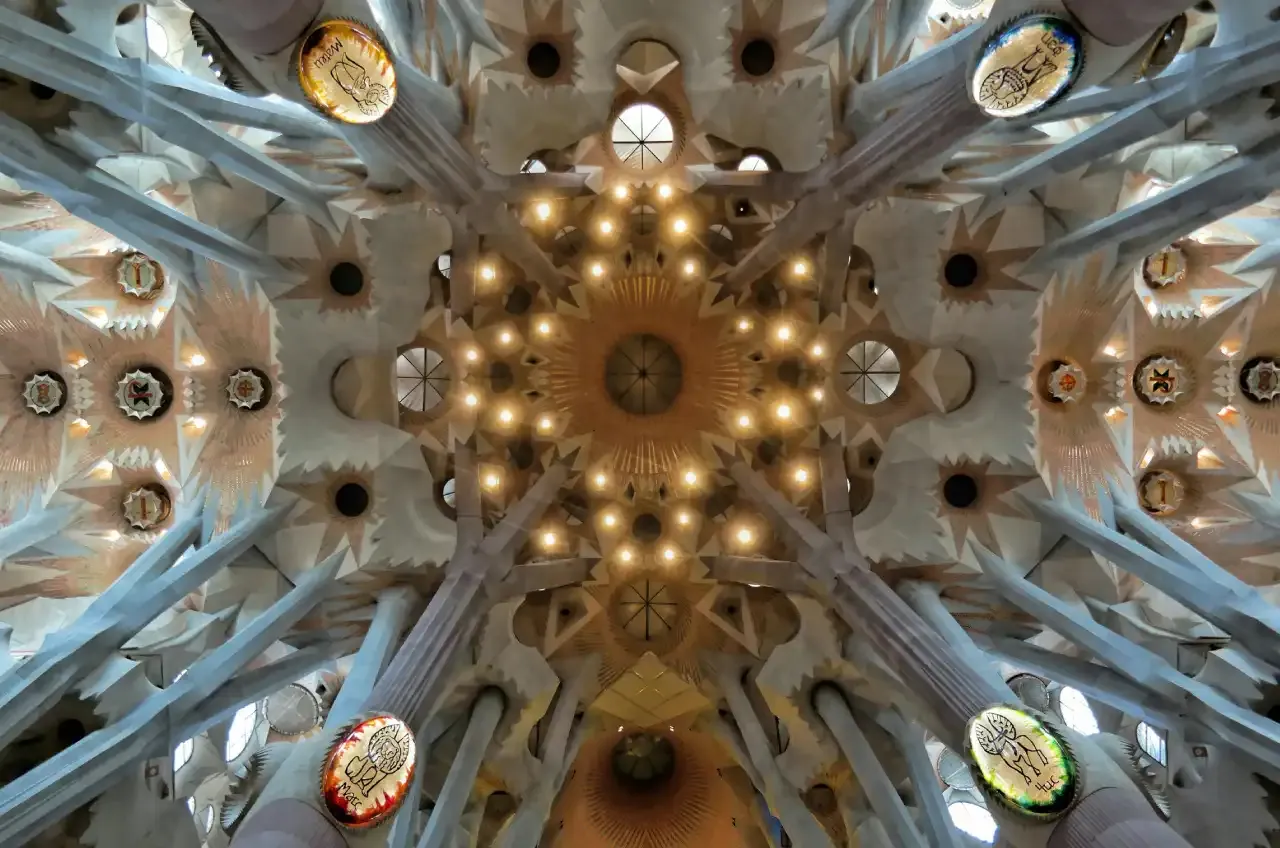
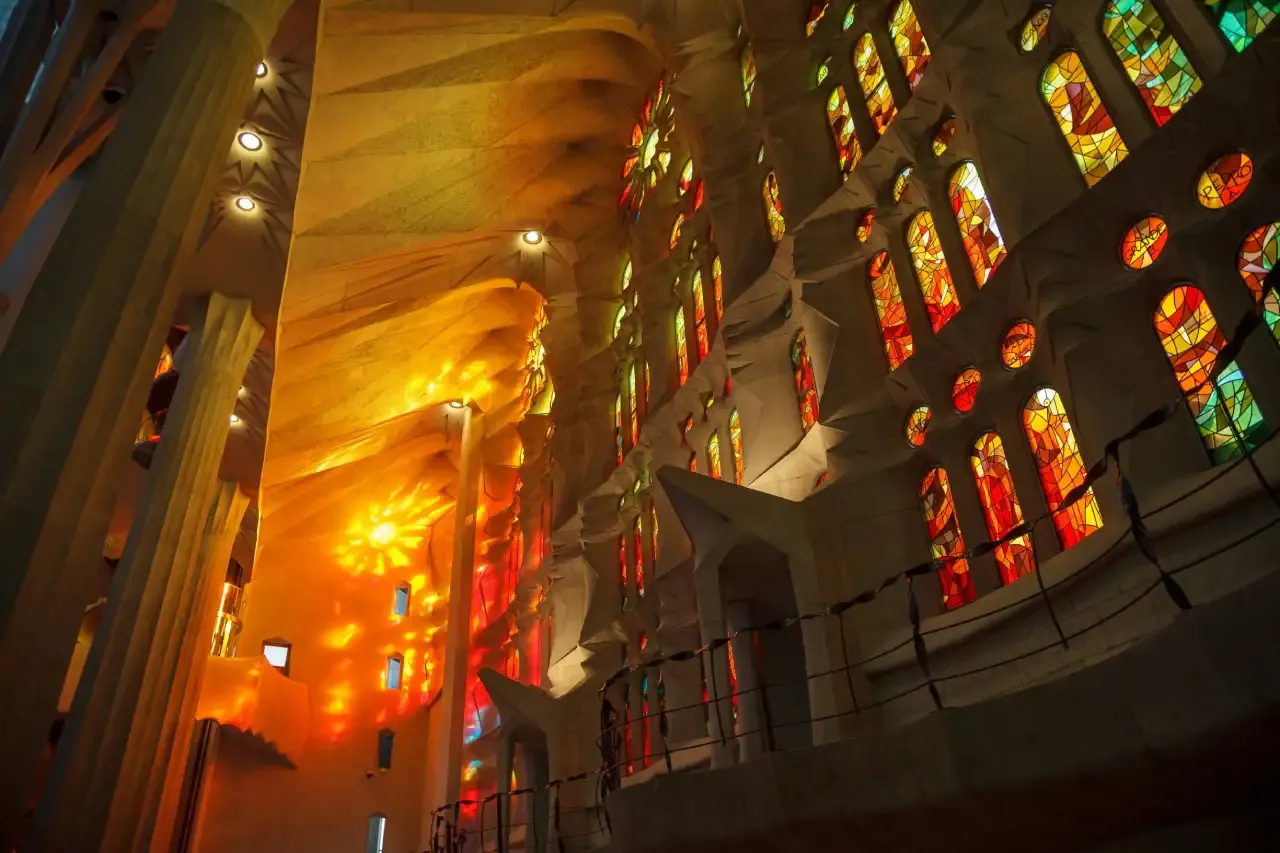
The interior offers a chromatic spectacle that changes according to the sun’s position. The most prominent area for photography is the central nave, where the tree-like columns branch out toward the ceiling, creating a forest of stone. The stained glass windows by Joan Vila-Grau provide the best results during the "golden hour"—late afternoon for the warm red and orange tones on the Passion side, and morning for the cool blues and greens on the Nativity side.
Another significant point is the view from the apse toward the baldachin and the altar. Capturing the upward perspective of the hyperbola-shaped vaults allows for a clear representation of Gaudí’s geometric innovation and the spiritual atmosphere of the space.
Best times of day to take photos
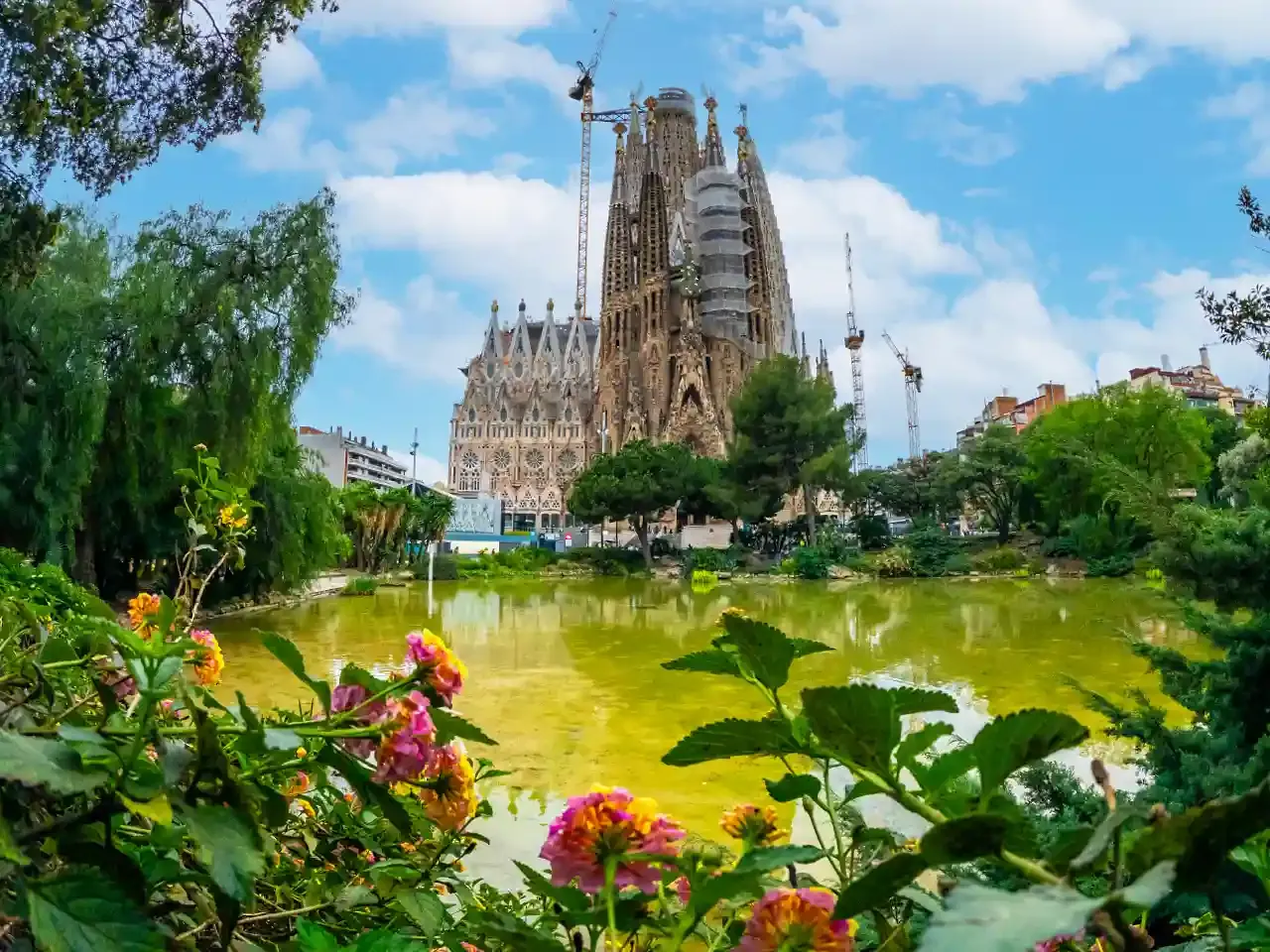
Ideal lighting conditions occur during sunrise or early morning in summer, winter, and clear autumn days. During these hours, the sun, positioned to the east, fully illuminates the Nativity façade. Conversely, the western side near Plaza Gaudí offers fewer optimal windows. Early morning is also the preferred time for photographing the Tower of Jesus Christ, while the opposite façade gives exceptional results toward sunset.
Barcelona enjoys sunshine for roughly 85% of the year, providing strong light for most photography. However, certain intervals present challenges: from 10:00 to 11:00, the sun rises behind the apse; between 15:00 and 16:30, the Nativity façade receives excessive direct light; and after 16:30, the interior becomes significantly darker. As the basilica is a consecrated religious site, flash photography is prohibited. The best time for most exterior shots is generally the window from about 30 minutes before to 30 minutes after sunset.
Composition and Framing Tips
The most effective framing angles for photographing the interior of the Sagrada Familia are the 3/4 view and the low-angle (contra-angle). These perspectives emphasize structural elements and enhance the sense of height, while also highlighting the building's characteristic U-shape. To achieve professional results, it is advisable to follow these principles:
- Capture the full structure: while conditions may vary, framing the entire building provides complete architectural context.
- Avoid centering the subject: instead of placing the main point of interest directly in the center, leave more space on the sides than at the top or bottom. This widens the visual path and encourages viewers to spend more time observing the entrance.
- Exclude distractions: avoid including unrelated objects, people, or vehicles that do not contribute information to the image.
- Utilize night photography: capturing the atmosphere at night with a slow shutter speed (4 to 5 seconds) creates light trails from traffic, adding dynamic quality to the shot.
- Align the horizon: keeping a level horizon prevents the building from appearing to lean backward and ensures the upper sections of the façade remain within the frame.