
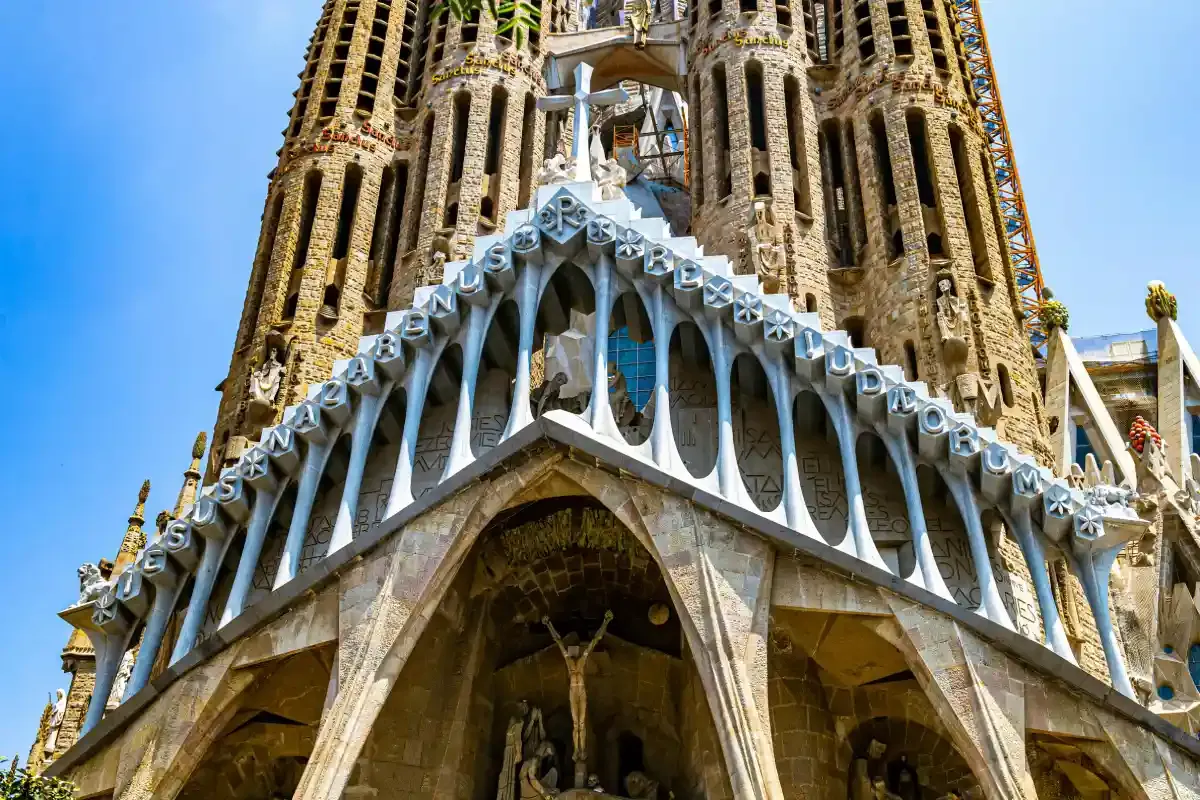
Facades of Sagrada Familia
The facades of Sagrada Familia function as the primary narrative structures of Antoni Gaudí’s basilica. Each of the three distinct vertical surfaces represents a specific stage in the life of Christ through integrated stone carvings and architectural symbolism. These exterior walls serve both as structural supports and as a visual medium for theological storytelling.
Three facades, three eras
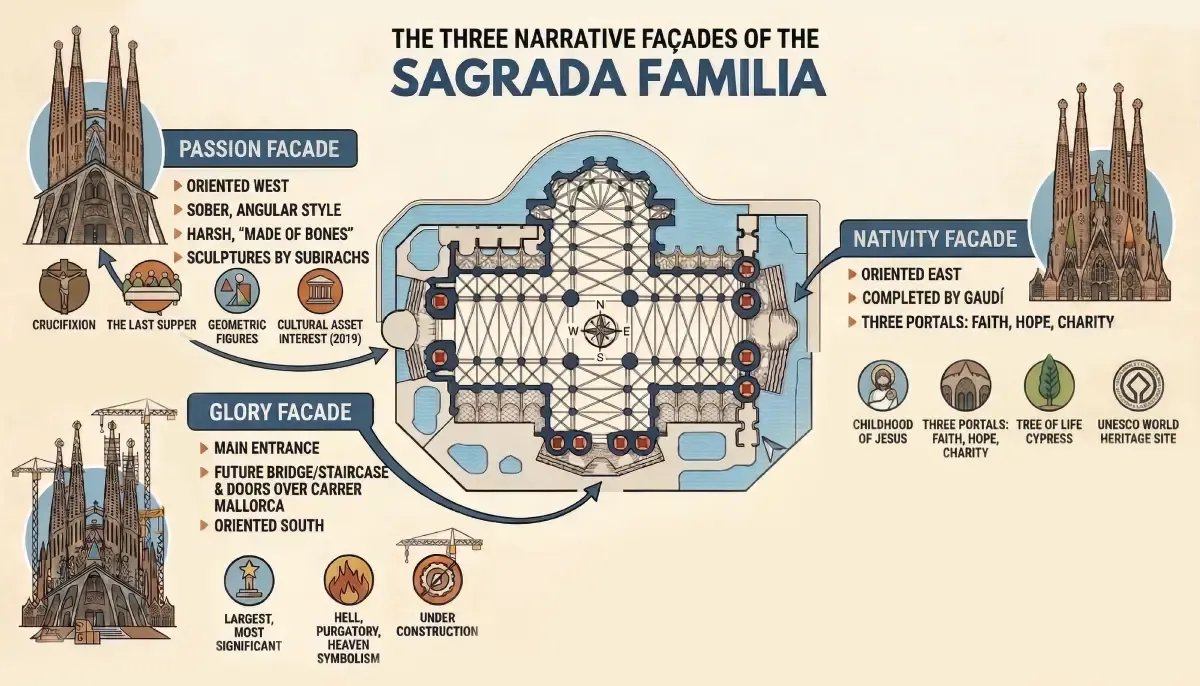
Nativity Facade (east, 1892–1930) by Antoni Gaudi; Passion Facade (west, sculptures 1986–2018) by Josep Maria Subirachs; Glory Facade (south, 2002–~2033) under construction.
UNESCO-listed
The Nativity Facade is the only facade Antoni Gaudi supervised in person and, together with the crypt, was inscribed as UNESCO World Heritage in 2005 under "Works of Antoni Gaudi".
World's tallest church
On 30 October 2025 the central tower surpassed Ulm Minster (161.53 m) at 162.91 m; the Tower of Jesus Christ reached its final height of 172.5m on 20 February 2026.
What are the three facades of the Sagrada Familia?
The Sagrada Familia’s exterior is designed as a "stone Bible," organized into three facades that represent the narrative arc of Jesus Christ's life:
- The Nativity Facade (East): Dedicated to the birth and childhood of Jesus. It is famous for its naturalistic style, featuring intricate carvings of flora, fauna, and joyful biblical scenes that celebrate the beginning of life.
- The Passion Facade (West): Dedicated to the suffering and death of Christ. It features a stark, minimalist aesthetic with angular, bone-like pillars and dramatic sculptures that convey the pain of the crucifixion.
- The Glory Facade (South): Dedicated to the resurrection and eternal life. As the main entrance, it represents the path of the human soul toward God, depicting death, final judgment, and the glory of heaven.
The Nativity Facade
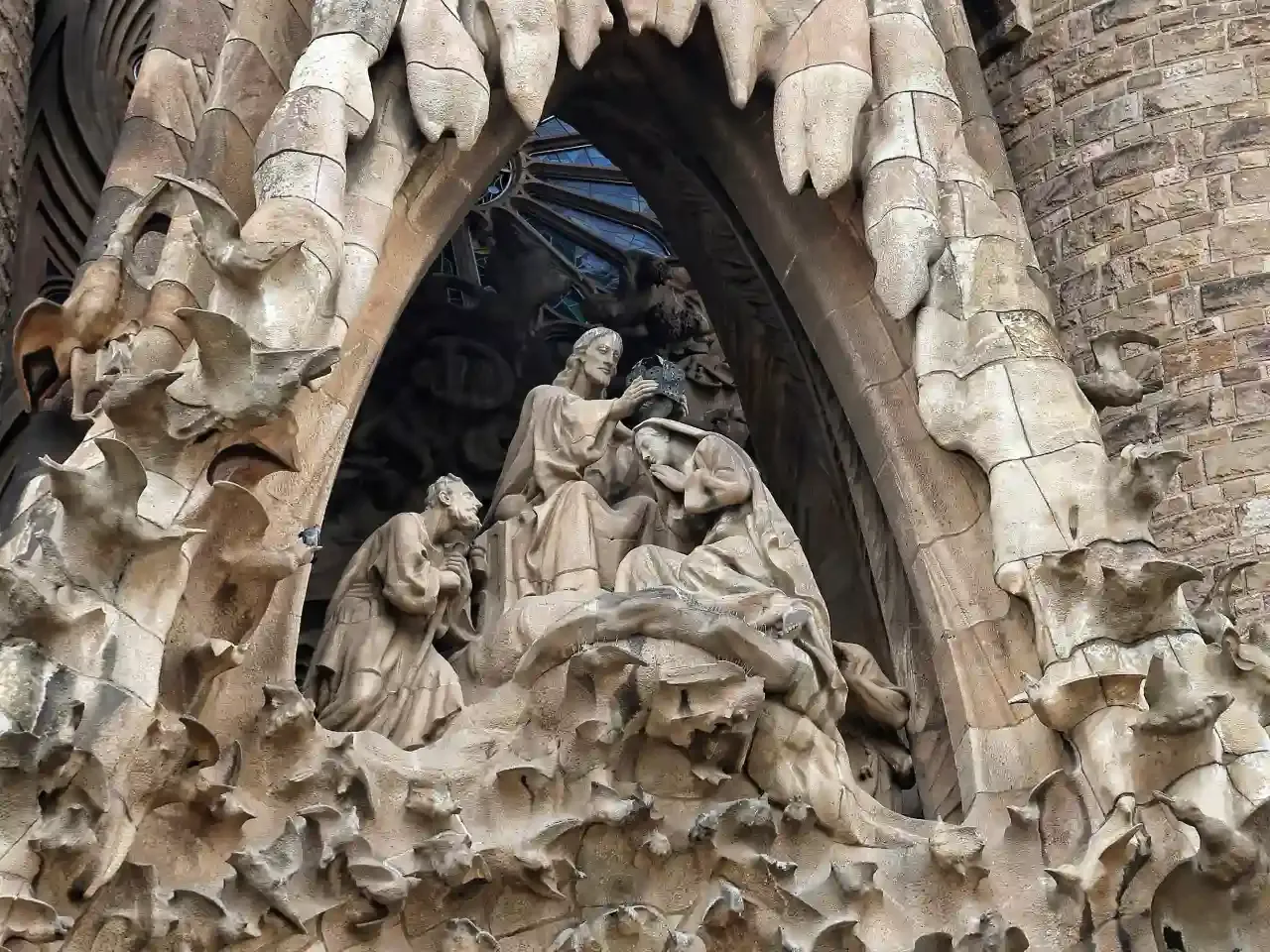
The Nativity Facade
The Nativity Facade represents the birth of Jesus and was the only part of the facades of Sagrada Familia constructed under the direct supervision of Antoni Gaudí. Work began in 1892 and continued until 1930, reaching completion after the architect's death. This facade faces the rising sun to the northeast, symbolizing the light of creation. It features three portals dedicated to the theological virtues of Hope, Charity, and Faith.
In 2005, UNESCO designated this specific section as a World Heritage Site due to its exceptional architectural value. The structure includes four bell towers dedicated to Saint Matthias, Saint Barnabas, Saint Jude, and Saint Simon, with the Saint Barnabas tower being the only one Gaudí saw finished in 1925.
The Passion Facade
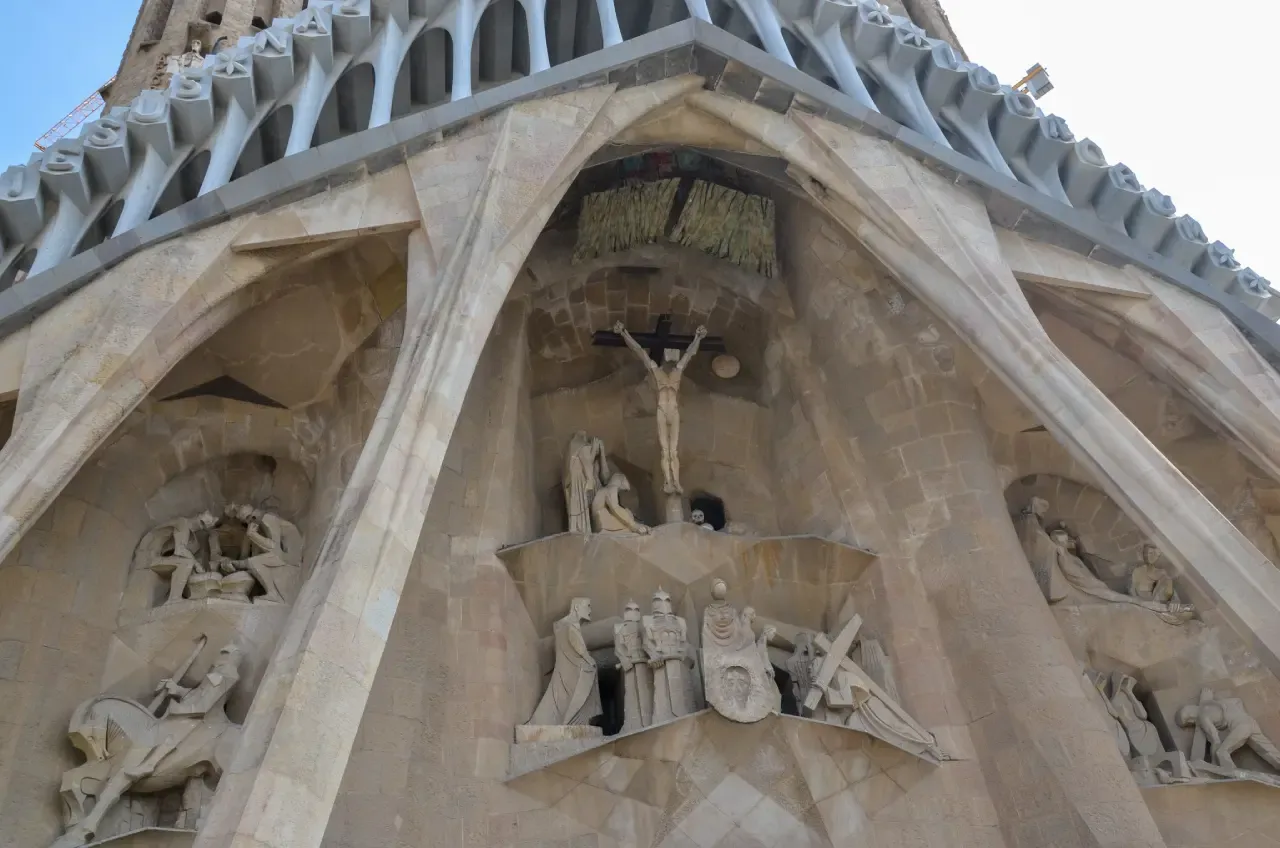
The Passion Facade focuses on the suffering and crucifixion of Christ, positioned to face the setting sun to represent the darkness of death. Although Gaudí left detailed drawings and instructions, structural construction only began in 1954 and the towers were finished in 1976. The figurative program was commissioned to the Catalan sculptor Josep Maria Subirachs in 1986, who worked on the stone carvings until 2014. These sculptures were officially completed in 2018.
As one of the most striking facades of Sagrada Familia, it utilizes angular, skeletal forms to convey human pain. Notable elements include the "Kiss of Judas" and a mathematical cryptogram known as the magic square, where every row and column adds up to 33.
Photo: “Passion Façade” by Joe Shlabotnik.
The Glory Facade
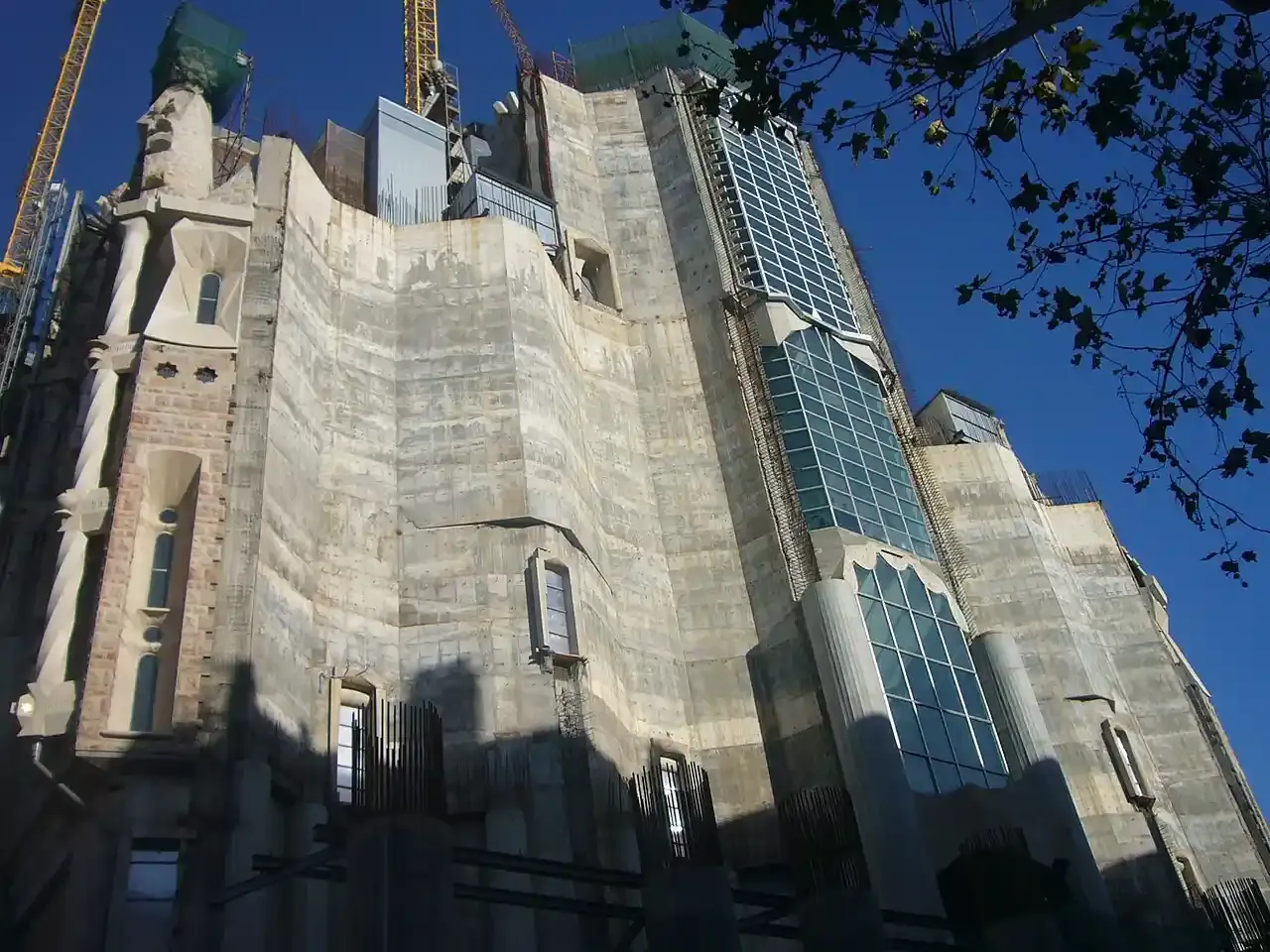
The Glory Facade
The Glory Facade is the largest of the three facades of Sagrada Familia and remains under construction on the south side of the basilica. Work on this section started in 2002 and follows Gaudí’s original theological plan regarding death, final judgment, and resurrection. Once finished, it will serve as the primary ceremonial entrance to the building. The main bronze doors, which feature the Lord's Prayer in fifty different languages, were installed in 2008 by Subirachs.
Current projections suggest the structural and decorative elements of this facade will be completed around 2030. Its completion involves a controversial urban plan that may require the demolition of adjacent city blocks to build a monumental staircase leading to the entrance.
Photo: “Glory facade - Sagrada Familia 2011" by Jordiferrer.
How do the three Sagrada Familia facades compare?
The architectural narrative of the basilica is divided into three distinct eras, each marked by a unique artistic language and a specific stage of Christ's life. Below is a comparison of the key attributes of the facades of Sagrada Familia:
| Facade | Nativity |
|---|---|
| Orientation | East (northeast) |
| Primary artist | Antoni Gaudí |
| Artistic style | Naturalistic, organic |
| Theological theme | Birth and joy of creation |
| Period | 1892-1930 |
| Status | Completed (UNESCO 2005) |
| Facade | Passion |
|---|---|
| Orientation | West |
| Primary artist | Josep Maria Subirachs (sculptor) |
| Artistic style | Angular, skeletal |
| Theological theme | Suffering and death of Christ |
| Period | 1954-2018 |
| Status | Completed |
| Facade | Glory |
|---|---|
| Orientation | South |
| Primary artist | Multiple (ongoing) |
| Artistic style | Monumental (planned) |
| Theological theme | Resurrection and divine glory |
| Period | 2002-present |
| Status | Under construction (~2030) |
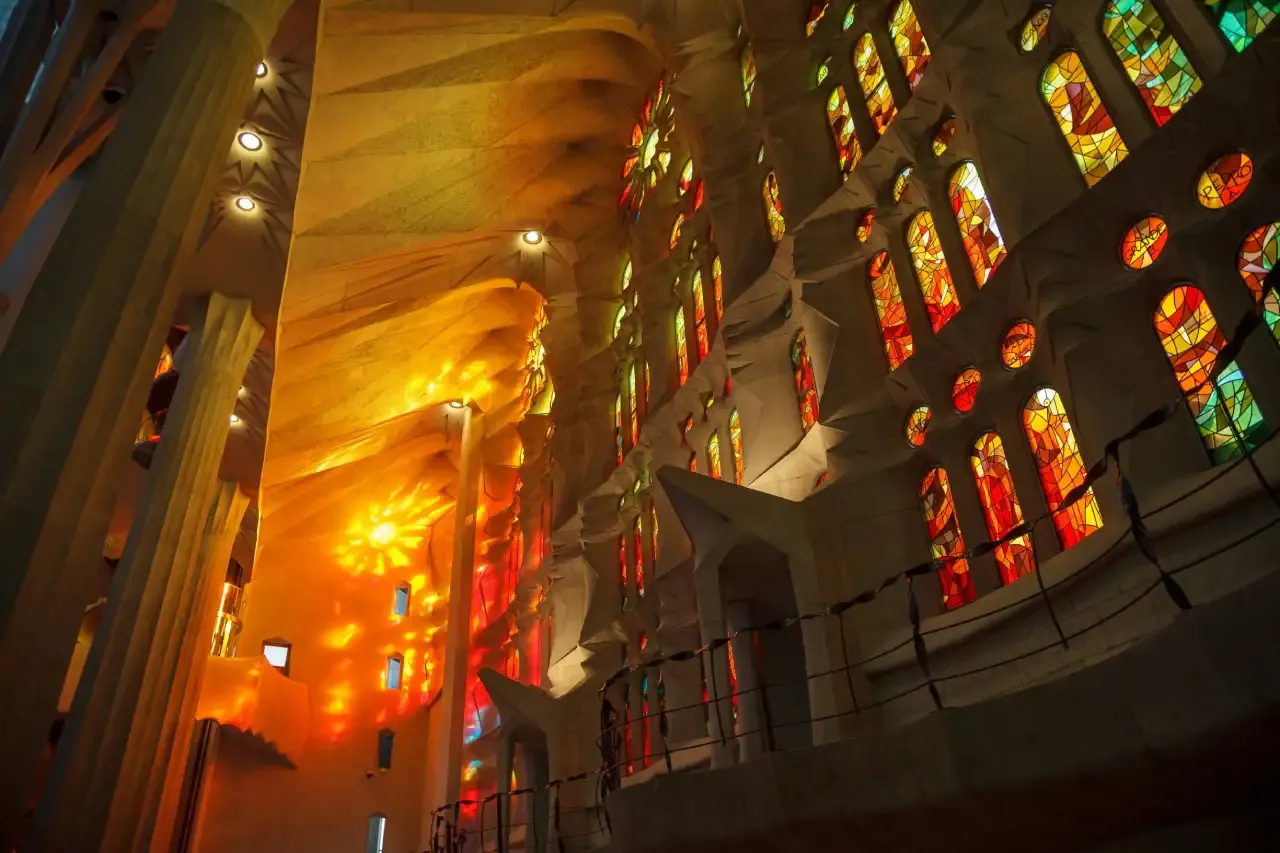
How does stained glass transform each facade's light?
The stained glass windows, designed by Joan Vila-Grau, transform the interior of the Sagrada Familia into a shifting chromatic experience calibrated to the sun's path. Covering 8,500 square metres, the windows follow a specific orientation:
- The east-facing side by the Nativity Facade uses cool blue and green tones to create a meditative morning atmosphere.
- As the day progresses, the focus shifts to the west-facing Passion Facade side, where warm amber, orange, and red tones bathe the nave in golden light during the afternoon.
To experience these distinct effects with fewer crowds, visitors should choose early morning for the aquatic blue light or late afternoon for the warm golden hour, avoiding the peak hours between 12:00 and 14:00.
When is the best time to view and photograph each facade?
To capture the best photographs of the facades of the Sagrada Familia, visitors should time their visit to coincide with the sun’s path. Each structure is oriented to catch the light at specific times, which highlights its architectural details:
- The Nativity Facade (East): Direct sunlight hits this facade from opening time until 11:00. The morning light reveals the depth of the sculptural groups and the organic textures of the masonry.
- The Glory Facade (South): This section receives overhead light between 11:00 and 15:00. The south-facing orientation provides the strongest illumination during the spring and summer months.
- The Passion Facade (West): Sunlight reaches this side from 16:00 until sunset. The afternoon light emphasizes the angular edges and creates shadows on the skeletal figures designed by Subirachs.